
AdvertisementEmplacement Moneytizer · 31

Ford Taunus Transit
The Ford Taunus Transit is a legend of European light commercials, embodying since the 1950s the alliance between industrial practicality and commercial accessibility for small entrepreneurs and tradespeople. Launched in 1953, this emblematic model from the American brand established itself as an essential reference in its segment, directly competing with the Volkswagen Type 2 and the Renault Estafette. The Ford Taunus Transit history traces remarkable evolution through several generations marked by constant technological advances: from the first four-cylinder engine models of the 1950s-1960s, to the more robust and powerful versions of the following decades, to the modernized interpretations of the contemporary market. The Ford Taunus Transit generations progressively incorporated ergonomic improvements, better cabin habitability, more efficient diesel engines and increasing load capacity, thus responding to the growing needs of light transport professionals. Positioned between the compact commercial and the medium-sized van, the Ford Taunus Transit model has managed to retain its appeal with loyal customers valuing durability and value for money. Today, the Ford Taunus Transit technical sheet reflects modern standards for pollutant emissions and safety, although certain historical generations remain sought after in the used market for their mechanical simplicity and financial accessibility, confirming the lasting heritage of this European automotive classic.
 France
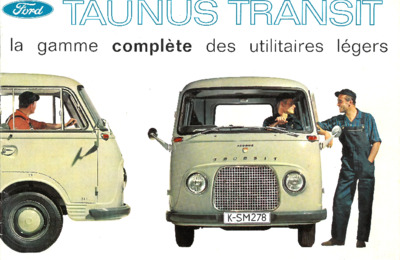
Browse every Ford Taunus Transit catalogue and brochure available as a free PDF download, from the oldest model to the very latest.
Every official sales brochure details the trim levels, engines, equipment and colours offered when the vehicle launched — perfect for planning a purchase, restoring a car or checking its original specifications.
All Ford Taunus Transit documents can be viewed online and downloaded free of charge, with no sign-up required.
Advertisement