Peugeot plays its Chinese card: the Lion roars in Beijing
A Comeback That Leaves Nothing to Chance
Some automotive shows deserve to make a statement. The Beijing International Automobile Show 2026, open to the public from April 24 to May 3, is one for Peugeot. Absent from this event for several years, the Sochaux manufacturer is marking a highly symbolic return to one of the world's most influential automotive markets — and it's doing so in grand style, with two unprecedented concept-cars that encapsulate an entire turnaround strategy.
For Alain Favey, Peugeot's chief executive officer, the choice of Beijing is far from incidental: "This show is not simply about presenting our future product projects; it's about reaffirming our ambition." China as a laboratory, as a showcase, as a lever. The message is crystal clear.
A Forty-Year Franco-Chinese History
To understand this comeback, we must trace its origins. PSA, the predecessor of Stellantis, was one of the very first Western manufacturers to establish itself in China, as early as 1985. It was in 1992 that the group decided to put down deeper roots, creating a joint venture with Dongfeng called Shenlong — "the magic dragon" in Chinese. A name that sounded like a promise.
The partnership then deepened over the decades. Dongfeng, a state-owned group ranking among China's ten largest manufacturers, entered PSA's capital in 2014 and still holds a stake in the Stellantis group today. Industrial allies for over thirty years through their DPCA joint venture, the two groups never truly severed ties — even when Peugeot sales in China collapsed in the face of the offensive from local brands.
Beijing 2026: Concept 6 and Concept 8 Take the Stage
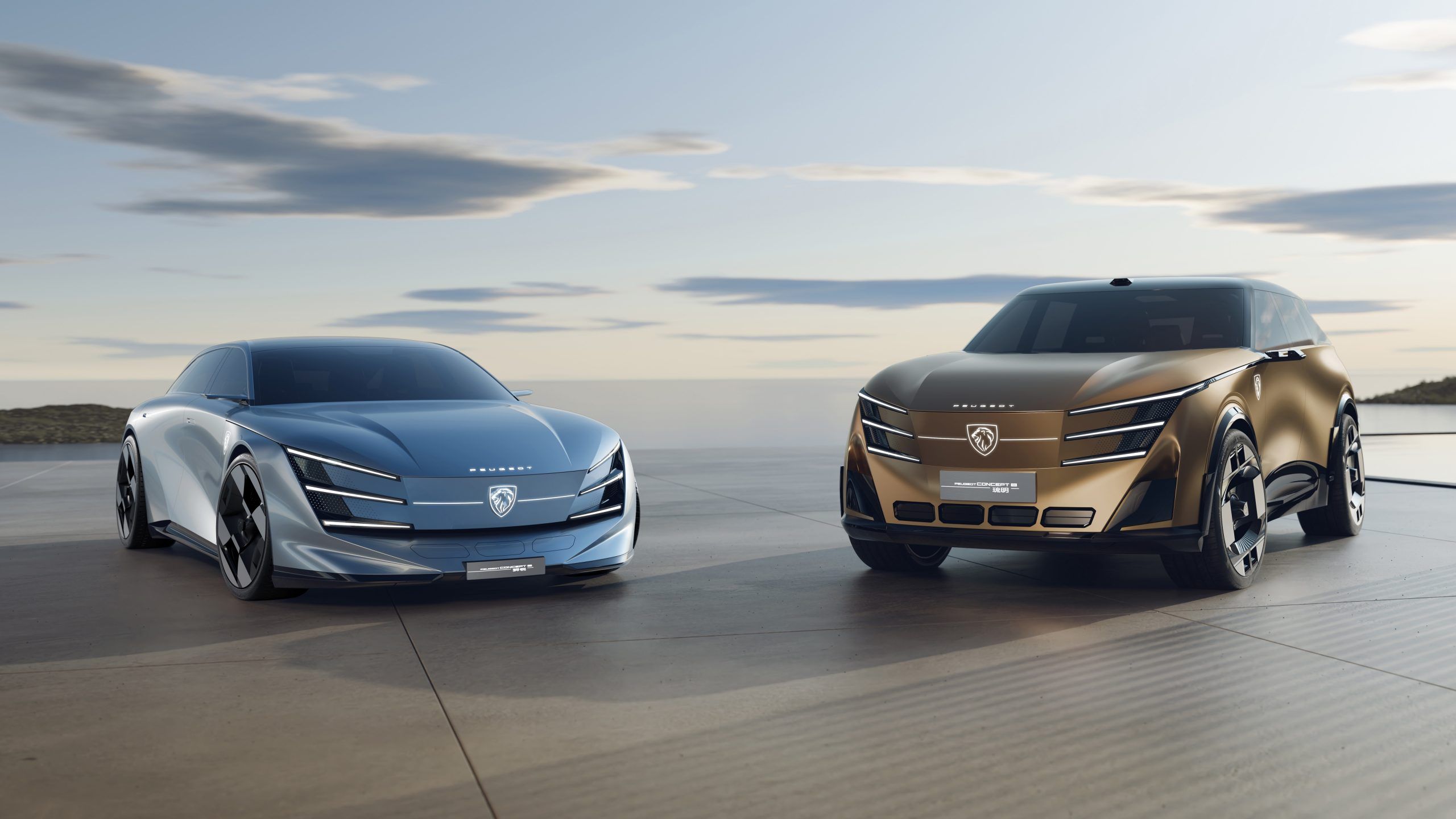
At the April 2026 show, the lion brand is not content with a symbolic presence. Peugeot unveils two unprecedented electric concept-cars there: the Concept 6, a vision of a large sedan in shooting brake fashion, and the Concept 8, a preview of its next major SUVs. These two studies illustrate the brand's upmarket strategy.
Stylistically, the two silhouettes share a common language. At the front, a lighting signature composed of three fine horizontal slashes points toward a full grille at the center of which sits an illuminated logo. At the rear, three LED lines sign off the stern in a recognizable way. Very smooth surfaces, sculpted wheel arches, claimed elegance: Peugeot bets on desire before practicality. Far more than simple styling exercises, these concept-cars illustrate the brand's ability to anticipate the expectations of a new generation of international customers.
Wuhan, Base of Global Comeback
What distinguishes this double reveal from a mere communications exercise is the industrial commitment that accompanies it. Stellantis and Dongfeng have announced the revival of their historic partnership: two new electrified Peugeot vehicles will be produced at the DPCA plant in Wuhan from 2027, destined for China and global export. A broader strategic agreement was also signed, opening the way for extended industrial cooperation.
Cars French at heart, Chinese by factory, global in ambition. The model is not without risk — the question of the reception reserved in Europe for Peugeots assembled in Wuhan remains open — but it reflects an industrial reality that other manufacturers have already embraced ahead of the lion. "China is a major engine of our global transformation, particularly in the areas of electrification, innovation, and upmarket positioning of the brand," sums up Alain Favey.
The Polygon, Vanguard of Global Renewal
The Beijing strategy is not to be read in isolation. It is part of a broader stylistic and technological renewal, initiated as early as November 2025 with the presentation of the Polygon concept. This showcar announces the future e-208 and constitutes the first expression of Peugeot's new styling language: pure lines, geometric forms, feline stance. It also introduces the Hypersquare rectangular steering wheel coupled with a steer-by-wire system — a first in the history of the Stellantis group — whose production launch is expected from 2027. The next e-208, which will inaugurate the Stellantis SP3 platform, should offer up to 500 km of WLTP range and enter production in Saragossa in autumn 2026.
The Concept 6 and Concept 8 in Beijing take up this same thread and extend it to larger, more ambitious proportions, decidedly aimed at a demanding international clientele.
The Lion is Hungry, and It Shows
Peugeot is currently playing a multi-faceted tune: electric city cars in Europe, premium large sedans and SUVs via China, a new design language for the entire range. With China as a major strategic pillar, the brand advances with confidence, drawing on its heritage while setting new standards for the future. The lion is back on the global stage — and clearly, it has no intention of settling for a bit part.
If this renaissance gives you the urge to (re)explore the lion brand's history, the Peugeot brochures available on Brochure Auto await you for a dive into decades of Sochaux creations.