Twingo, Spring, Pixo: one platform, three brands, the battle for the affordable electric city car
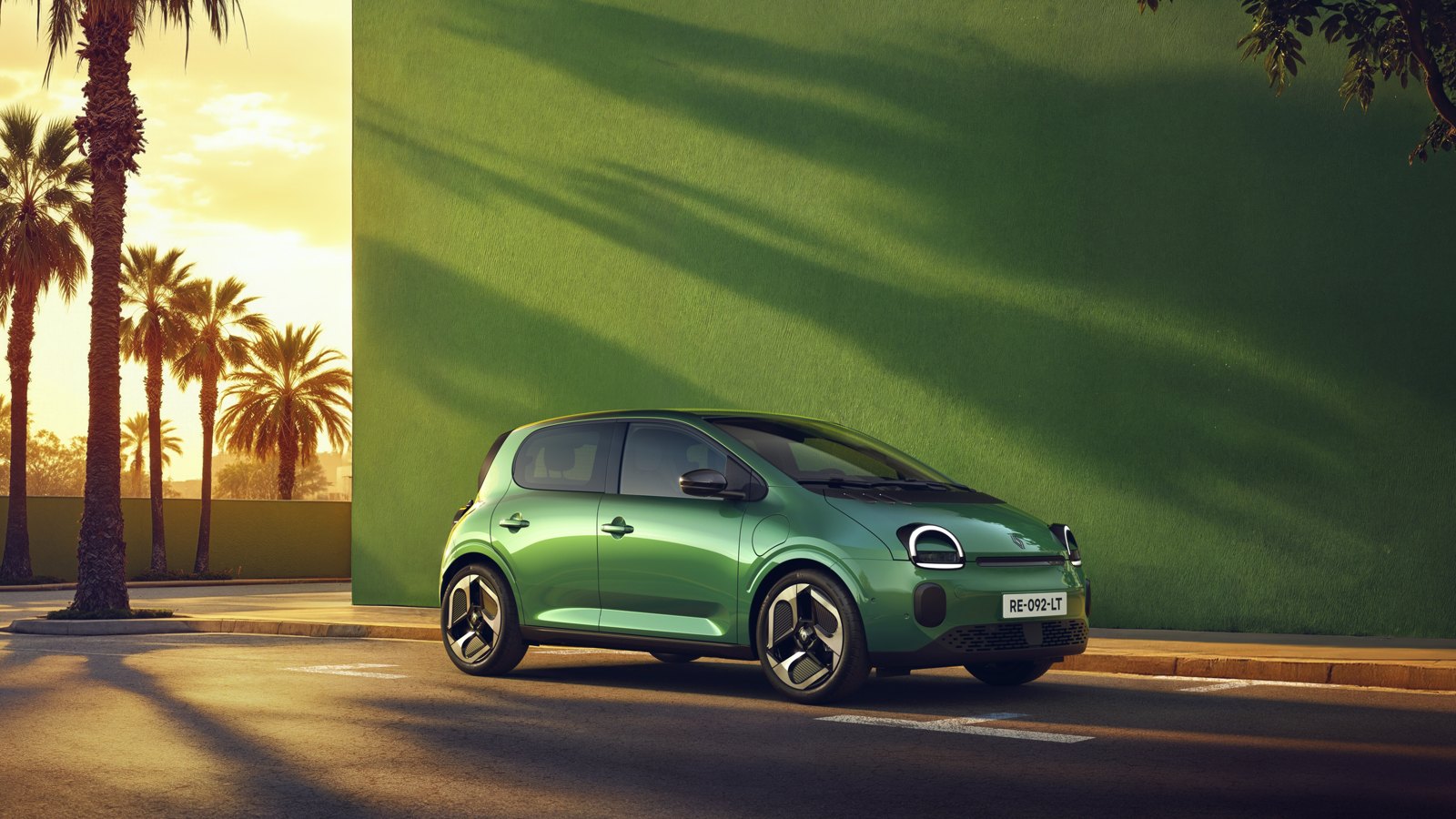
For years, we were promised an electric car for everyone, and for years it remained too expensive for most drivers. That ceiling is now cracking, and it's the Renault Group holding the hammer. Its new platform dedicated to small electric cars, internally dubbed RGEV and developed by its subsidiary Ampere, has just given birth to three cars at once: the Renault Twingo, the Dacia Spring, and the Nissan Pixo. Three logos, three personalities, but the same mechanicals underneath, all coming out of the same Slovenian factory in Novo Mesto. Since the mechanical base is shared, the real battle plays out elsewhere: in the equipment, and above all in what each one chose to keep or drop to hit its price point.
The same technical base, down to the last bolt
No point looking for big differences under the hood: there are hardly any. All three are built around a 60 kW electric motor, or 82 hp, powered by a 27.5 kWh LFP battery. WLTP range runs from 250 km for the Spring to 263 km for the Twingo, with the Pixo in between at 259 km — differences nobody will notice in daily driving. Fast DC charging caps out at 50 kW on all three, enough to recover most of the battery in about half an hour, and the footprint remains that of a true city car, under four meters long. This degree of sharing is the whole point of the exercise: by spreading the development cost across three brands instead of one, Renault manages to make a small EV profitable where everyone else thought it impossible. There's a tasty anecdote reported by the trade press: Volkswagen was reportedly approached to share this platform, chose to decline, and is now watching the Slovenian train go by without having hopped on board.
Renault Twingo: charm and a complete package
It's the one that kicked things off, and the one playing the emotional card. The Twingo E-Tech unapologetically revives the silhouette of the 1993 original: rounded nose, round headlights, friendly face, but now with five doors and in a 2026 guise. Renault designed it in record time, with help from a Chinese partner to meet the deadline, and with one clear obsession: staying under 20,000 euros. Mission accomplished, with the entry-level Evolution trim starting at 19,490 euros and the Techno at 21,090 euros, for a price that can drop to around 14,720 euros once the government bonus is deducted, depending on the household's eligibility.
On the equipment side, the Twingo comes standard with a dual digital display: a 7-inch instrument cluster in front of the driver and a 10-inch central touchscreen. The question is what's running on it. The Evolution trim only mirrors your smartphone onto the central screen, while the Techno unlocks the OpenR Link system with Google built in, its route planner, the Reno voice assistant, and two gigabytes of monthly data. The higher trim also adds a reversing camera, four levels of regenerative braking controlled via paddles, and one-pedal driving. The real standout feature is in the back: the Twingo inherits a rear bench that slides over 17 centimeters, boosting boot space from 205 to 305 liters depending on whether you prioritize legroom or luggage, with a maximum volume of 360 liters. That makes it the most versatile of the three when it comes to handling an unexpected load.
Dacia Spring: the art of deliberate trade-offs
True to its philosophy, Dacia doesn't try to win you over with extras, but with the final price tag. The new Spring starts at 17,900 euros in Expression trim and climbs to 19,400 euros in Journey trim, making it the cheapest of the trio and one of the most affordable new EVs on the market. To get there, the Romanian brand accepts trade-offs where its cousins pile on the extras. The Twingo's sliding rear bench? Gone: the Spring makes do with a 50/50 split-folding rear bench, which is still an improvement over the previous generation's single-piece bench, but without the Renault's flexibility.
The central screen follows the same logic. On the entry-level Expression trim, there's no touchscreen at all: instead, the Media Control system takes over, meaning your own smartphone, slotted into a central holder, becomes the command center via a dedicated app, with essential information displayed on the 7-inch instrument cluster. You have to move up to the Journey trim to get the Twingo's genuine 10.1-inch touchscreen, complete with wireless Apple CarPlay and Android Auto and connected navigation guaranteed for eight years. In exchange for these concessions, Dacia focuses on the practical: a 337-liter boot with a two-part modular floor, capacity that jumps to nearly 1,283 liters once the rear bench is folded down, and above all the YouClip system, those anchor points that let you clip a portable lamp, a bag hook, or a glasses holder into the cabin. The Spring doesn't hide its strategy: every euro saved corresponds to a feature deliberately left out, and that's exactly what its customers are looking for.
Nissan Pixo: the most tech-savvy of the three
The third player is the most surprising. With the Pixo, unveiled on September 23, 2026, Nissan is making its comeback on the A-segment in Europe, a category it had abandoned long ago. The name isn't new for the brand, having already been used between 2009 and 2013 on a city car. Beneath the reworked bodywork — front and rear ends redesigned to establish a distinct house signature — lies the now-familiar mechanicals of the Twingo. But it's inside the cabin that the Pixo surprises the most.
Far from cutting back on technology, Nissan doubles down on it. The dashboard borrows the Renault's architecture, dressed up with red trim around the air vents and a Pixo logo on the steering wheel, but the 10-inch central touchscreen here runs on Android Automotive with Google services and the Gemini assistant, and depending on trim, the car features facial recognition capable of recalling each driver's settings. The brand's e-Pedal technology, which lets you slow down simply by lifting off the accelerator, is also on board. The Pixo also retains the Twingo's valuable modularity, with two independent, sliding rear seats that comfortably accommodate four adults, and claims the best boot in the segment at 356 liters, plus a 50-liter underfloor compartment for storing cables. The downside to this well-executed effort is the wait it demands: pricing won't be revealed until December 2026, with deliveries expected in early 2027.
Options and omissions: who put what on the scale
Placed side by side, the three siblings offer three different answers to the same question: what do you keep when every euro counts? On the sliding rear bench, the Twingo and the Pixo say yes, the Spring says no. On the built-in touchscreen, the Pixo and the Twingo Techno offer it without hesitation, while the Spring only grants it on the top trim, otherwise sending the driver back to their smartphone. On boot modularity, each has its own trick up its sleeve: the two-part floor and YouClip accessories for the Dacia, the sliding bench for the Renault, the dual compartment and record-setting 356 liters for the Nissan. Driver assistance systems and charging, meanwhile, remain within the same range, with all three accepting 50 kW DC charging and faster AC charging on higher trims. In other words, nobody missed their target: the Spring trims the equipment list to defend its price, the Pixo stacks on the tech even if it means making buyers wait, and the Twingo seeks balance between the two.
So, which one should you choose?
That's the tricky question, because on the road, these three will drive in an almost identical way. The choice, then, won't come down to spec sheets but to priorities. For those who want charm and a complete package without breaking the bank, the Twingo opens its arms. For those who only look at the price tag and don't mind controlling their car via their phone, the Spring offers the lowest entry ticket on the market. For those who want the most advanced tech and the most versatile cabin, the Pixo will likely be worth the wait until early 2027, provided its pricing stays in line with the Twingo's. In the end, it hardly matters who wins this sibling rivalry, because the real winner lies elsewhere: after years of promises, drivers can finally afford a brand-new electric car, French or nearly so, for the price of a used combustion-engine model. That may well be where the real shift toward electric is happening, far more than in 50,000-euro sedans.
Want to know more? Find all the Renault Twingo brochures available for free download on Brochure Auto.
Gallery
Photos © Renault, Dacia et Nissan
- https://fr.wikipedia.org/wiki/Renault_Twingo
- https://www.largus.fr/actualite-automobile/prix-renault-twingo-2026-gamme-et-equipements-de-la-citadine-electrique-30044814.html
- https://www.automobile-propre.com/voitures/dacia-spring-2/
- https://europe.nissannews.com/en-GB/releases/smart-fun-and-highly-capable-the-all-new-electric-pixo-is-here