Hyundai Ioniq 3: the compact electric car that wants to shake up the Megane E-Tech
A Newcomer That Doesn't Go Unnoticed
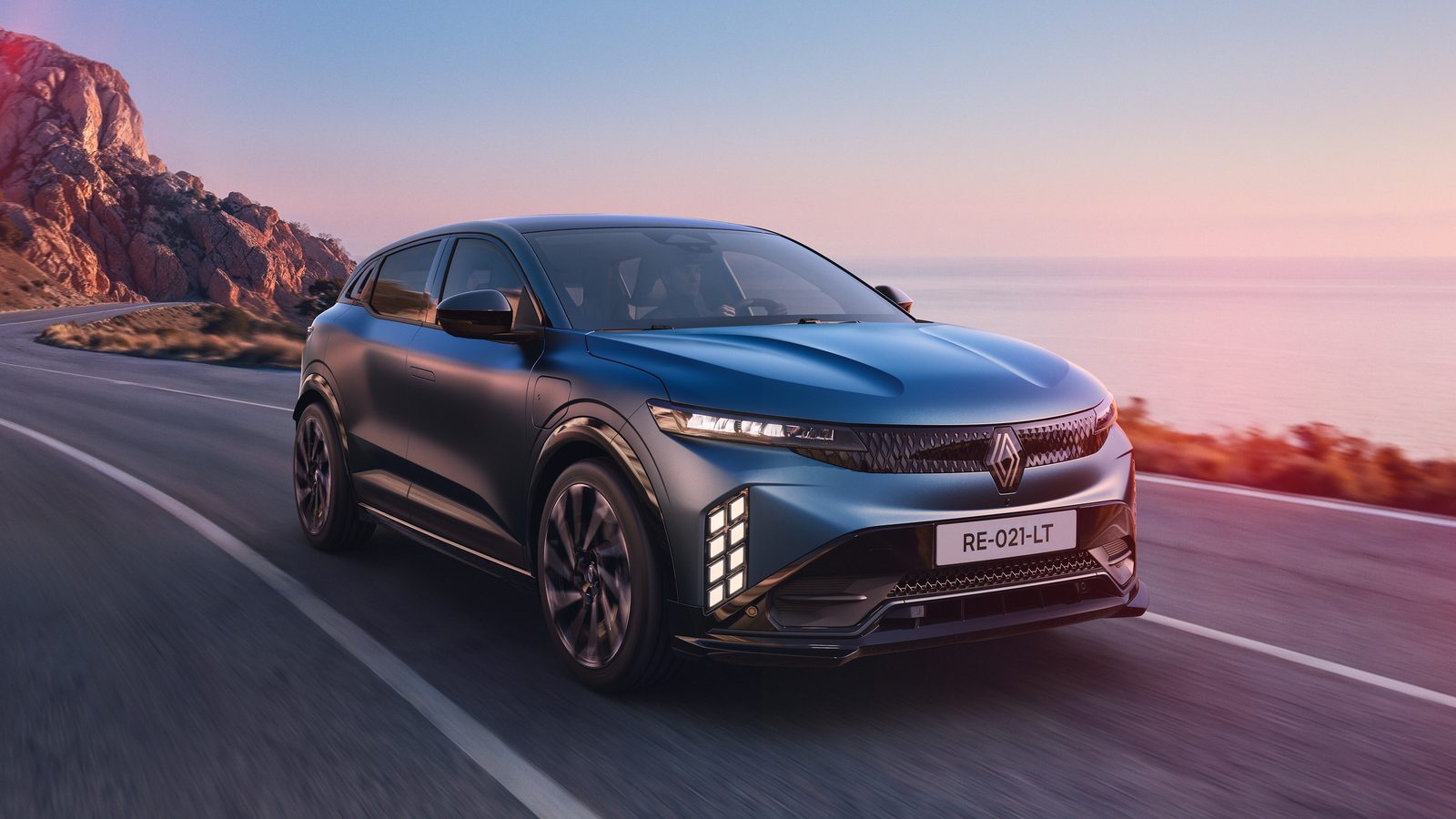
On April 20, 2026, at Milan Design Week, Hyundai unveiled the Ioniq 3. And let's be clear right from the start: the Korean brand isn't playing it safe. This 100% electric compact car slots in between the Inster and the Kona Electric in the range, targeting an ultra-competitive European segment: that of affordable and trendy compact vehicles. With up to 496 km of WLTP range announced and an expected starting price around €30,000, the Ioniq 3 clearly has the credentials to shake up the Renault Mégane E-Tech or Volkswagen ID.3.
From Concept Three to Production Model
The Ioniq 3's story officially begins in September 2025 at the IAA Munich motor show, when Hyundai reveals the Concept Three. This show car in metallic tones already previews the future compact sedan's appearance. Seven months later, in Milan, the final version is unveiled. While the spirit remains, the concept's futuristic dashboard has been replaced with a more conventional layout, and the body has been toned down to meet industrial constraints. The lineage is nonetheless evident, particularly at the front and rear.
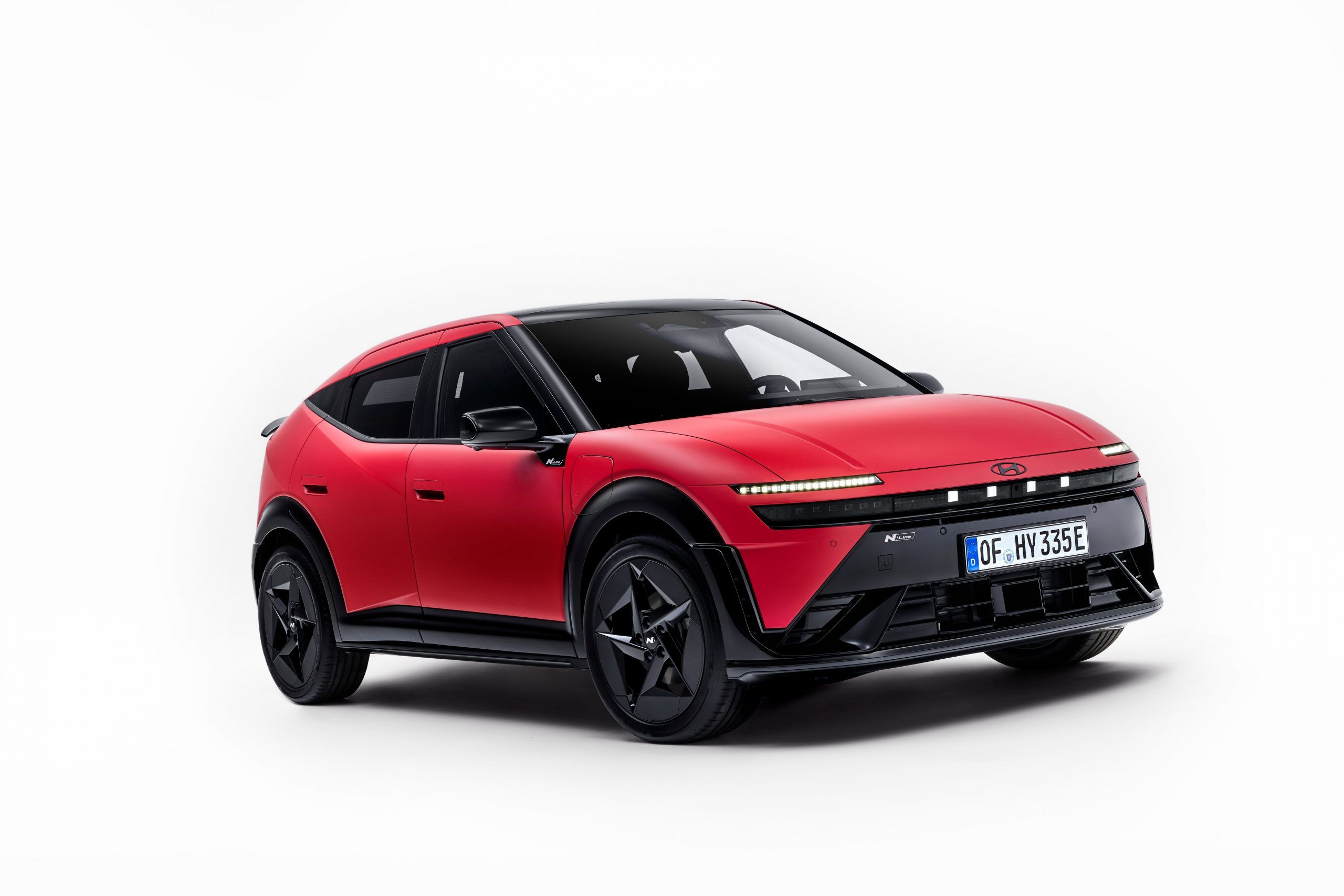
Most importantly, the Ioniq 3 marks the debut of a new design language called "Art of Steel"—the art of steel. Inspired by the purity and raw tension of metalwork, this style translates into controlled volumes and striking visual impact. The signature pixel headlights from the Ioniq range are present, complemented by four small central luminous squares that form the letter "H" in morse code. A nice touch.
Aero Hatch: The Silhouette That Makes the Difference
Hyundai has coined a term to describe its Ioniq 3's bodywork: Aero Hatch. In concrete terms, we're looking at a sleek fastback silhouette that prioritizes aerodynamic efficiency without sacrificing practicality. The result: a drag coefficient of approximately 0.26 according to the manufacturer, placing the Korean car among the best in its class.
In terms of dimensions, it stays lean: 4,155 mm long, 1,800 mm wide, 1,505 mm tall, with a wheelbase of 2,680 mm. Shorter than a Mégane E-Tech, but with an identical wheelbase. The promise? Genuine five-seat comfort, thanks to the flat floor.
E-GMP Platform and Battery Options
Under the skin, the Ioniq 3 sits on Hyundai Motor Group's E-GMP platform, in its 400-volt version (not 800 volts like the Ioniq 5 and 6, which explains slightly less impressive charging times). Two batteries are available: 42.2 kWh for the standard version, with over 344 km of WLTP range announced, and 61 kWh for the long-range version, with up to 496 km of WLTP.
Traction is provided by a permanent magnet synchronous motor mounted on the front axle, developing up to 107.8 kW (147 hp) and 250 Nm of torque. Top speed is limited to 165 km/h. Charging from 10 to 80% takes approximately 29 minutes on a DC fast charger, and the Ioniq 3 accepts up to 22 kW in alternating current, which remains rare in the segment. The V2L (Vehicle-to-Load) function, handy for powering electrical devices, is included.
Inside: Pleos Connect Takes the Stage
The Ioniq 3 introduces Europe to the new in-house infotainment system, called Pleos Connect. Based on Android Automotive OS, it offers a smartphone-like experience, with its own App Market open to third-party developers. The central screen measures 12.9 or 14.6 inches depending on trim, complemented by a small instrument display positioned high, near the windshield, head-up display style. Hyundai's famous dual-screen layout therefore gives way to a new approach.
Equipment-wise, the Ioniq 3 features the Hyundai SmartSense suite with level 2 highway driving assistance, remote parking, 360° panoramic view... Also worth noting is the integration of digital key and Plug & Charge functionality, which seriously simplifies life at public charging stations.
Production in Turkey and Launch in Autumn 2026
The Ioniq 3 will be assembled at the İzmit plant in Turkey, which should allow the Korean car to be eligible for the French ecological bonus. Sales are scheduled to begin in the third quarter of 2026. Eleven exterior colors are announced at launch, with wheel sizes ranging from 16 to 19 inches. An N Line variant with a sportier look will complete the range from the start.
Eleven colors, a proven platform, cutting-edge infotainment, design that stands out, and a competitively priced starting point: Hyundai seems to have thrown all the ingredients into the mix to make this a success. All that's left is to discover the final prices, but this could well be a winning formula.
Discover on Brochure Auto
Curious to explore the Hyundai range and its electric innovations in detail? Brochure Auto brings together the official catalogs from the Korean brand, and the partner website completes the experience with Hyundai user manuals. The Ioniq 3 will of course get a dedicated page as soon as it arrives at dealerships.