Renault in the Electric Age: The Diamond Shifts Gear
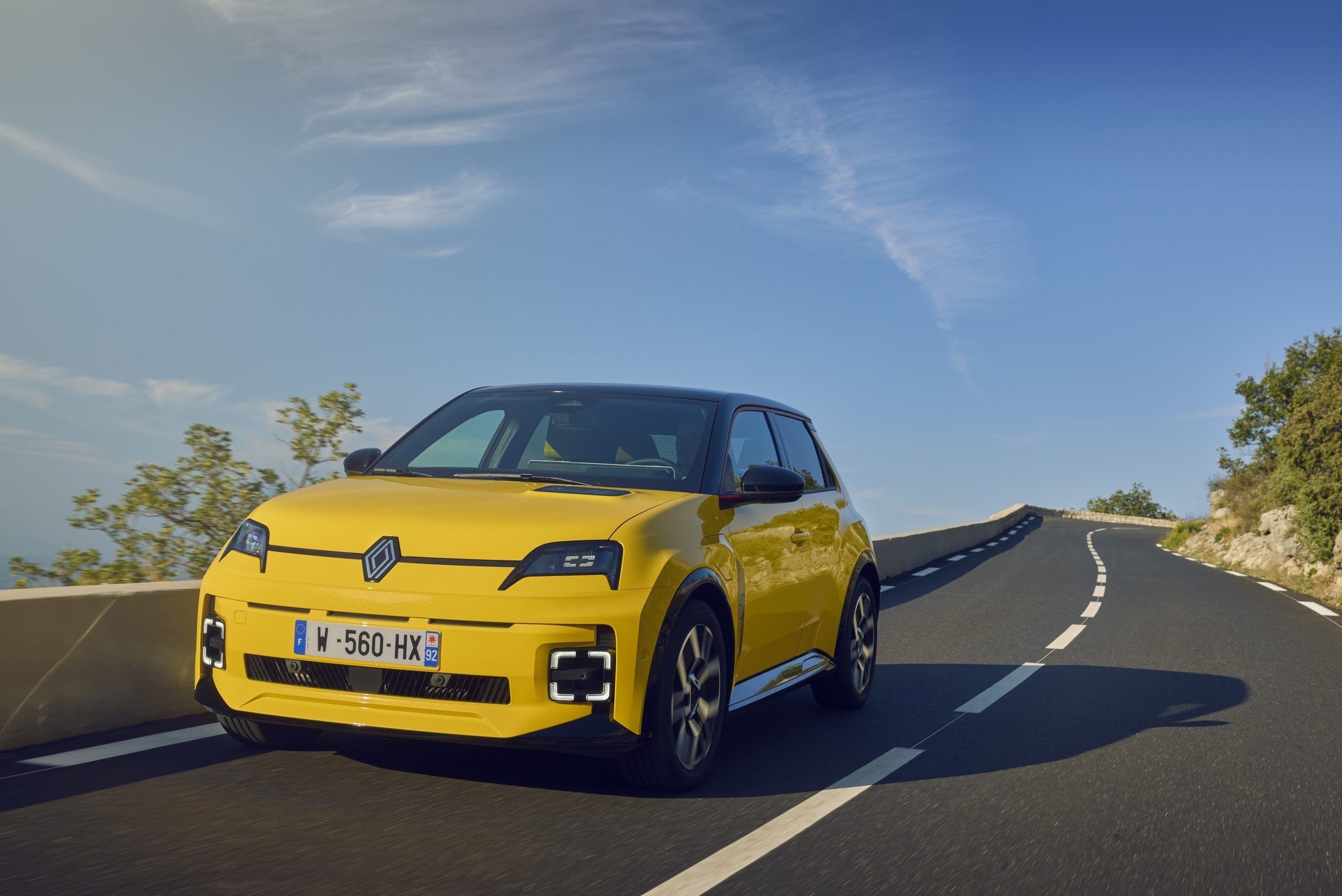
There was a time when Renault was the automaker that dared to go all-electric before anyone else, with the Zoé, that little blue city car that became one of the best-selling electric vehicles in Europe. But since then, the world has changed: the Chinese arrived with their rock-bottom prices, European regulations evolved, and customers sometimes hesitated. So in 2026, the diamond-badged automaker reset the clock with its major strategic plan futuREady, an ambitious roadmap to radically transform its electric lineup through 2030. And to say the least, it doesn't do things halfway.
From Renaulution to futuREady: continuity in ambition
To understand the current strategy, we first need to recall that Renault isn't coming out of nowhere. The Renaulution plan, launched under the impetus of Luca de Meo in 2021, had already deeply restructured the group: return to profitability, product line upgrades, creation of Ampere (the subsidiary dedicated to electric vehicles), and a series of successful launches—notably the Renault 5 E-Tech Electric, a genuine commercial phenomenon that reached the milestone of 100,000 units assembled in early December 2025 at the Douai plant.
With François Provost's arrival at the helm of the group, the strategy was refined, not abandoned. The new CEO set a clear guiding principle: design the product starting from the customer, while strengthening discipline based on value rather than volume. In other words, no more chasing market share at any cost—place to sustainable profitability and accessible electric vehicles.
futuREady: 36 models in five years, including 16 electric
Officially presented in March 2026, the futuREady plan represents the most ambitious roadmap in the recent history of the diamond brand. Renault plans to launch 36 new models between 2026 and 2030, of which 16 are fully electric—more than the 32 models marketed between 2021 and 2025. It's an outright impressive pace for a mainstream automaker.
The stated objective is clear: by 2030, the Renault brand targets 100% electrified sales in Europe, while 50% of sales outside Europe should also be electrified.
An already robust electric lineup
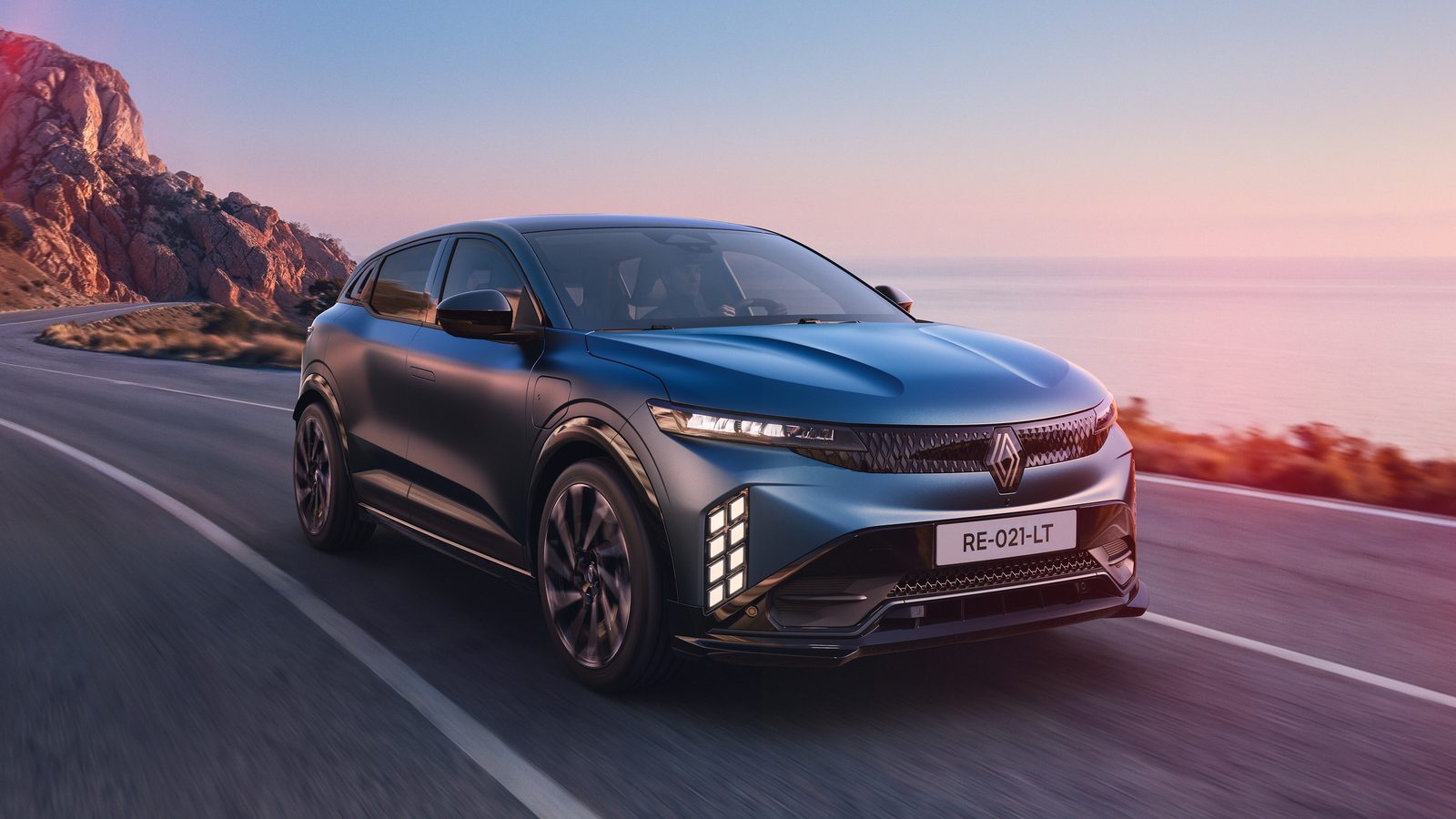
In 2026, Renault can rely on a solid electric range: the Mégane E-Tech, the Renault 5, the Scénic E-Tech, and the Renault 4 E-Tech, with the Twingo coming next. The latter is arguably the most symbolic offensive: built on the AmpR Small platform, the Twingo E-Tech Electric is equipped with a 60 kW motor and a 27.5 kWh battery for an announced range of 263 km in WLTP cycle, available from under 20,000 euros. At that price point, it's hard to find an argument against electric.
Technology at the heart of the battle
If Renault wants to hold its own against Asian automakers, it can't just rely on beautiful designs. The answer is technological, and the group fully embraces this.
Modular platforms to control costs
All passenger vehicles planned under futuREady will be developed on four platforms, including the RG EV Small, which is the foundation of the "Car of the Year" 2025 successes. This pooling is key to reducing development costs and accelerating product cycles.
The software-defined vehicle
One of the most exciting projects in the plan is the SDV—Software-Defined Vehicle. This will be the first European SDV introduced to the market in 2026, the first automotive operating system based on Android in partnership with Google. Thanks to the scalability of this architecture, most updates are delivered remotely (over the air), cutting the time-to-market for new features in half. In short: your Renault will evolve like a smartphone.
Next-generation batteries
The group is notably working on batteries capable of recharging in ten minutes, as well as on rare-earth-free electric motors, designed and developed in Europe. A direct response to industrial sovereignty challenges, in a context where dependence on Chinese raw materials is increasingly questioned.
Neither naive nor dogmatic: pragmatism as a compass
What sets Renault's strategy apart from an all-or-nothing bet is its assumed pragmatism. Electric vehicle market growth has proven slower than expected, and the European Union has relaxed its regulations by authorizing certain hybrid technologies after 2035. Renault has therefore broadened its objective to electrified powertrains in their entirety, planning to maintain hybrid models in Europe after 2030.
We're not abandoning customers who aren't yet ready to switch to pure electric—and that's a wise decision.
Made in France: the industrial advantage
An often underestimated pillar of Renault's strategy is local production. Three flagship models—Renault 5, Renault 4, and Mégane E-Tech—are produced within the Ampere ElectriCity industrial hub, in Douai and Maubeuge in northern France. This choice meets the requirements of the CEE scheme, which boosts grants awarded to buyers of vehicles assembled in Europe. Result: the Twingo E-Tech becomes accessible from 13,750 euros for a household in energy poverty situations.
The diamond in pole position?
Renault is playing its tune with a coherence rare in the automotive industry. Where other automakers are backing down, wavering, or waiting to see, the diamond moves forward methodically: expanded lineup, breakthrough technology, sovereign production, accessible prices.
"Electric is good for the customer and there's no question of going back to gasoline. The problem isn't the powertrain but its price," says François Provost. It's hard not to subscribe to this philosophy.
The challenge for the coming years will be maintaining this relentless pace of 36 models in five years while preserving profitability. But if the Renault 5 has proven one thing, it's that when Renault takes the time to blend emotion with common sense, French automotive can still make the whole world thrill.
Find all brochures from the Renault electric lineup in our catalog: Twingo E-Tech, Renault 5 E-Tech, and Renault 4 E-Tech—available for free download.