"Facel Vega: The Rise and Fall of the French Rolls-Royce"
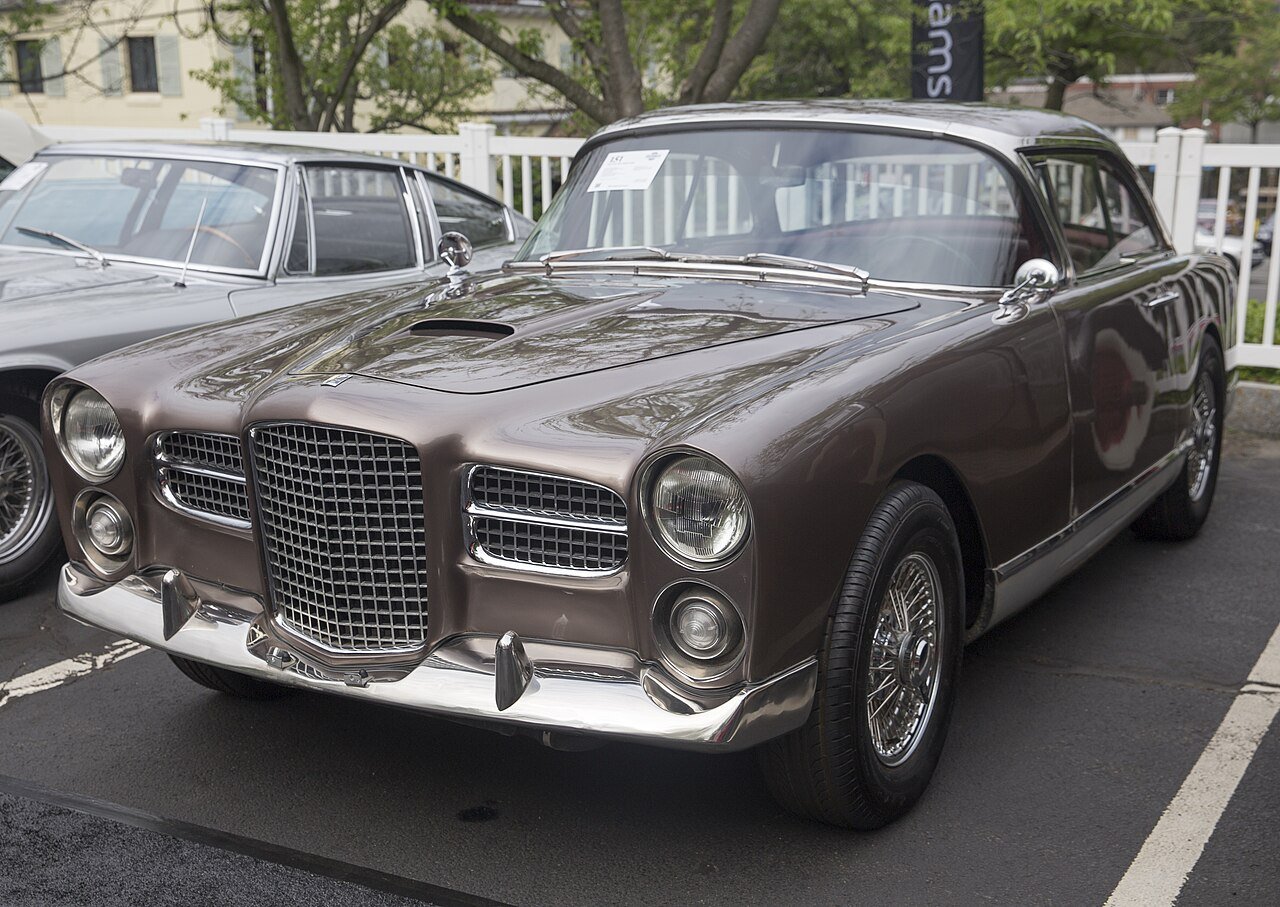
There was a time when France knew how to build truly grand luxury cars, capable of holding their own against Ferrari and Rolls-Royce. That era has a name: Facel Vega. Born in 1954 and gone just ten years later, the Parisian marque left behind a handful of majestic coupés and an aura that has never faded. Here is its story.
From sheet-metal workshop to dream carmaker
Before it ever built its own cars, Facel worked in the shadow of others. Its name tells the story of its original trade: Forges et Ateliers de Construction d'Eure-et-Loir. Under the direction of Jean Daninos, the company had made a name for itself in stamping and coachbuilding, clothing models for Panhard, Simca, Ford and even Bentley. This high-couture metalworking expertise soon gave Daninos an ambitious idea: what if Facel built a car entirely its own?
Jean Daninos was no stranger to the industry, either: having worked in aeronautics and at Citroën, he also had a famous brother, the writer Pierre Daninos, father of the celebrated Major Thompson. The idea took shape in October 1954, at the Paris Motor Show. The Facel Vega FV caused a sensation there. Beneath its long hood beat a heart from across the Atlantic, a powerful Chrysler V8, housed in a sturdy chassis and dressed in elegant, instantly recognizable bodywork. The formula was set, and it would barely change from then on: American mechanicals for power, French elegance for everything else.
The golden age of the grand tourers
The true high point came at the end of the 1950s with the HK500. This opulent coupé, built to devour Europe in a single stretch, delivered remarkable performance for its time along with first-class refinement, right down to its faux-wood-painted dashboard. Facel then expanded its lineup with a rare object: the Excellence, an imposing four-door sedan with no visible center pillar and rear doors that opened in opposite directions. Then, in 1962, came the Facel II, sharper and more modern, considered by many to be the marque's masterpiece. Powered by a mighty Chrysler V8, it ranked among the fastest French cars of its era.
These cars cost a fortune and sold in tiny numbers: combined production of the various FV and HK versions remained very limited, around 840 units according to the figures generally accepted. That's where their rarity today comes from. Yet they won over a clientele that no French marque has ever gathered again since.
A clientele worthy of a red carpet
Driving a Facel Vega, in those years, meant belonging to a very exclusive club. The marque attracted leading personalities — Pablo Picasso, Ava Gardner, Stirling Moss and Frank Sinatra are often mentioned, though such lists of famous owners should be treated with caution. It embodied a way of life, a blend of discreet power and prestige that the jet set fought over on both sides of the Atlantic.
A Facel Vega also entered, tragically, into literary history. On January 4, 1960, the writer Albert Camus lost his life in one of these cars, driven by his friend Michel Gallimard — publisher and nephew of Gaston Gallimard — in an accident near Villeblevin, in the Yonne region. Winner of the Nobel Prize in Literature in 1957, Camus then stood at the very summit of French letters. The fate of the marque and that of a giant of literature thus crossed paths forever, on a road in the Yonne.
The small car that brought down the big one
To broaden its audience, Facel aimed lower with the Facellia, a compact coupé launched at the turn of the 1960s. A bad bet. Rather than buying a proven engine, the marque had developed its own four-cylinder, entrusted to Pont-à-Mousson. Fragile and prone to repeated failures, it triggered an avalanche of warranty repairs that drained the company's finances. Around 1,100 Facellias were produced according to available sources, but the engine's repeated failures multiplied warranty returns.
The damage was done. Despite rescue attempts and a return to more reliable engines, Facel Vega never recovered. In October 1964, the last great French luxury marque took its final bow, undone by the cost of its own ambition and by increasingly fierce international competition.
A legend that still rolls on
Sixty years later, a Facel Vega in good condition trades for the price of a fine house, and every appearance at a concours d'élégance draws admiring looks. The marque lived for just a decade, but it proved that a European carmaker could rival the biggest names in world luxury. To continue the journey through grand tourers and cars full of character, period catalogs and brochures are well worth browsing on Brochure Auto.
Want to know more? Find all the Facel Vega "" brochures available to download for free on Brochure Auto.
Gallery
Photos © Mr.choppers (CC BY-SA 3.0), Rex Gray (CC BY 2.0), Triple-green (CC BY-SA 2.0) / Wikimedia Commons
- https://en.wikipedia.org/wiki/Facel_Vega
- https://www.motorlegend.com/histoire-automobile/saga-facel-vega/facel-vega-facel-2/6,9354,8896.html
- https://www.leblogauto.com/historique/histoire/marques-disparues-episode-22-facel-vega/