Broken Butterflies: The Crossed Destinies of the Bricklin SV-1 and the DeLorean DMC-12
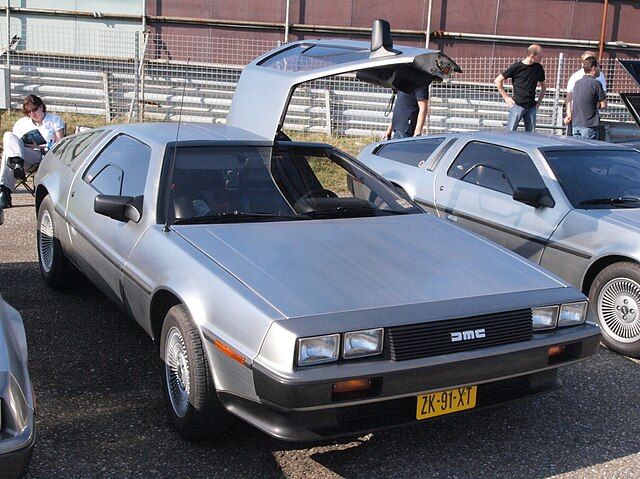
In the history of the automobile, there exists a handful of stories so similar that they seem written by the same cursed screenwriter. Two coupes with gullwing doors. Two flamboyant entrepreneurs. Two revolutionary promises. Two resounding bankruptcies. The Bricklin SV-1 and the DeLorean DMC-12 did not only share the same door design: they shared the same fate, seven years apart. A coincidence? Not at all. An American obsession with the automotive dream, pushed to excess.
Malcolm Bricklin: the brilliant pitchman
It all begins with Malcolm Bricklin, born on March 9, 1939 in Philadelphia to a modest family. The man is not an engineer, not a designer, not even passionate about automobiles in the technical sense. What he is, is an outstanding salesman, equipped with nerve and a gift of the gab that would make a Las Vegas showman pale. At nineteen, he takes over his father's hardware store in Florida and transforms it into a franchise chain called Handyman America. Profitable for him, disastrous for his franchisees who find themselves cheated. Bricklin pockets the startup fees, methodically orchestrates his insolvency, and disappears a millionaire before lawsuits arrive. He's not even thirty yet.
What follows resembles a series of crazy bets that almost work out. In 1968, he founds Subaru of America and imports the Subaru 360, a microcar weighing less than 400 kilos. Consumer Reports immediately designates it as "the most dangerous car in America." No matter: Bricklin sells his 10,000 units through spectacular promotions in supermarket parking lots, takes Subaru public, then resells his shares to the Japanese parent company for a substantial profit. He's in the Los Angeles jet set, a friend of Hugh Hefner, a regular at Playboy parties. And he has a new vision.
The name SV-1 stands for "Safety Vehicle One" — a truly safe sports car, with integrated safety structure and energy-absorbing bumpers, at a time when very few manufacturers ranked safety equally with performance. Designer Marshall Hobart sketches modern lines and those famous gullwing doors that Bricklin is desperately in love with. The stated target: nothing less than the Chevrolet Corvette. A revealing anecdote: the SV-1 had neither an ashtray nor a cigarette lighter, because Bricklin considered smoking while driving dangerous. The character is consistent, at least.
Lacking private investors, he turns to Canada and the province of New Brunswick. During an election period, Prime Minister Richard Hatfield sees an opportunity to fight unemployment. The province advances $4.5 million and guarantees $12 million in loans — for 67% of the capital. The SV-1 arrives in 1974. Bricklin had promised a price of $4,000. At launch, it's $7,490. The following year, $9,980 — more expensive than the Corvette. Problems accumulate: car bodies warping in the heat, doors too heavy, faulty headlights, interior leaking water. The motorized door opening takes eight seconds. After only 2,854 units assembled, Bricklin enters liquidation. Canadian taxpayers lost approximately $23 million.
But Bricklin always bounces back. He then imports the Fiat X1/9 and 124 to the United States (1982), then the Yugoslav Yugo (1985) — a car that becomes the laughingstock of all America but of which he sells 163,000 units in three years before reselling his stake for $20 million. In 2004, he attempts to import Chinese Chery cars to the United States, raises $200 million with George Soros's help, and gets outmaneuvered by Chery itself, which signs behind his back with Chrysler. Lawsuits, international arbitration, confidential settlements. In 2017, at 78, he announces wanting to transform high-end auto dealerships into art galleries. The New York Times once described him as "the automotive version of P.T. Barnum". That's exactly it.
John DeLorean: the golden boy caught by reality
The other man in this story is of a completely different caliber. John Zachary DeLorean is born on January 6, 1925 in Detroit, son of a Romanian immigrant worker in a Ford foundry. Where Bricklin is a salesman, DeLorean is an engineering genius combined with an irresistible seducer. He climbs the ranks at General Motors at a stunning pace: general manager of Pontiac at 40, Chevrolet at 44, vice president of the group at 47. He invents the Pontiac GTO in 1964 — the birth of the American muscle car — by slipping a 6.4-liter V8 into a station wagon body. In the conservative world of gray suits in Detroit, DeLorean arrives with his shirts unbuttoned to his navel, his full sideburns, his dyed hair, and his model wife. Total anomaly. And a potential future president of GM, according to rumors.
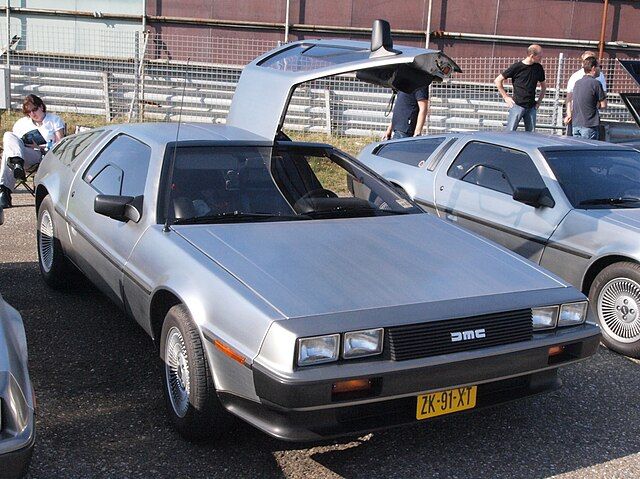
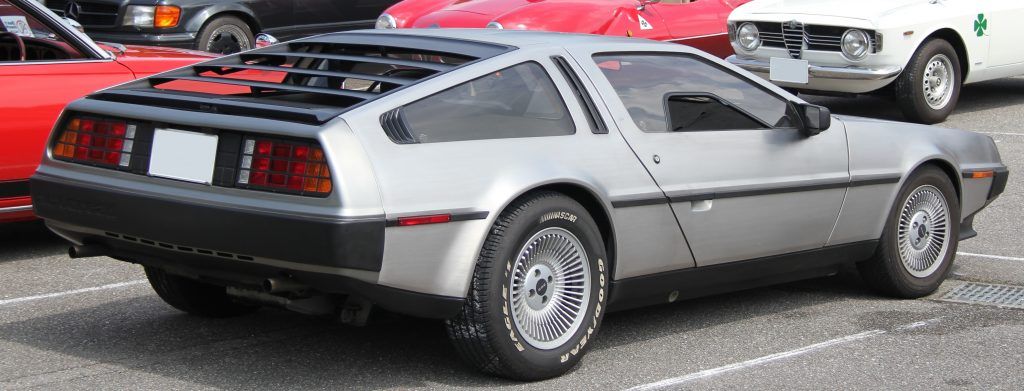
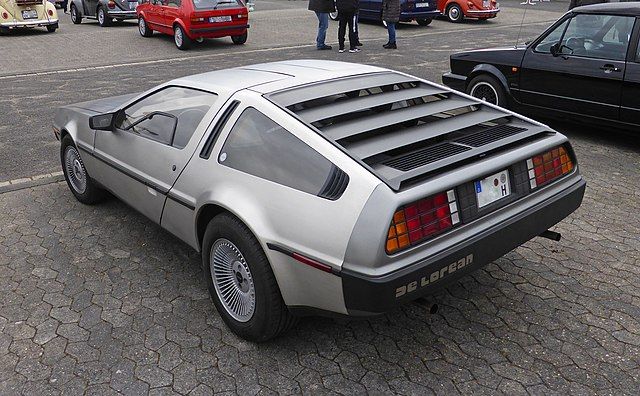
In 1973, he slams the door and founds the DeLorean Motor Company. His project: a futuristic GT with stainless steel body, designed by the legendary Giorgetto Giugiaro, with gullwing doors as visual signature. Designed by the Italian, assembled in Northern Ireland at the Dunmurry factory near Belfast, powered by a Franco-Swedish V6, based on a chassis conceived by Lotus: the DMC-12 is a purely European object bearing an American's name.
Irony of fate: during the gestation of the SV-1, a certain John DeLorean is seen wandering through Bricklin's corridors taking notes and photos. The man clearly drew lessons from this visit — but not necessarily the right ones.
Stainless steel butterflies, soft steel performance
The first prototype is created in 1976 and production begins on January 21, 1981. The DMC-12 is a fascinating object: the stainless steel body gives it a "space-age" look very popular in the 1980s, but this originality comes at a cost — the panels tolerate no impact or dent, as repairs are nearly impossible.
Under the rear hood, reality is less exciting. The 2,851 cc PRV V6 develops only 130 hp. 100 km/h is reached in approximately 10 seconds according to independent tests — the official figures were more optimistic. For a GT supposed to make America fantasize, it's a bit short. The DeLorean suffers from the same syndrome as the Bricklin: a promise of sportiness not delivered by the mechanics. The intended price was $12,000. At launch, it reaches $25,000.
On October 19, 1982, John DeLorean is arrested at a Los Angeles hotel during a DEA operation. Agents trap him with a briefcase containing 25 kg of pure cocaine, filming his reaction. The company is declared bankrupt the same day. It takes until August 16, 1984 for the jury to render its verdict: acquitted due to entrapment — federal agents had illegally manipulated him through an informant who was a former neighbor of DeLorean himself. Justice served, but too late.
After his acquittal, his third wife, model Cristina Ferrare, files for divorce. His vast 500-acre estate in New Jersey is bought by a certain Donald Trump, who turns it into a golf club. The following years are a long decline: investor lawsuits, fraud accusations, personal bankruptcy declared in 1999. DeLorean attempts to relaunch his brand under the name DMC2, even produces a watch called "DeLorean Time" playing on the aura of Back to the Future. He dies on March 19, 2005 of a stroke, at 80, in a one-room apartment in Bedminster. On his tombstone at White Chapel Cemetery in Troy, Michigan: a DMC-12 with doors raised.
Doc Brown would not have driven a Mustang
What Bricklin didn't have, DeLorean obtained by chance: cinematic immortality. In 1985, Robert Zemeckis transforms the DMC-12 into a time machine for Back to the Future, and the car becomes a worldwide icon. This choice might never have happened: Ford had offered $75,000 for the machine to be a Mustang. Film co-creator Bob Gale had declined bluntly: "Doc Brown doesn't drive a fucking Mustang!"
After the first film's success, Zemeckis receives thanks from DeLorean for having "perpetuated his dream." Today, the entire stock of original parts is managed by the DeLorean Motor Company of Texas, founded in 1997. The legend continues — without its creator.
The SV-1 remained confidential. Approximately 1,500 units supposedly still exist. If it doesn't have the aura of the DMC-12 despite a similar story, it's because it never had its Zemeckis. And also because its creator was more P.T. Barnum than James Dean.
Two ghosts, one myth
Yet both machines embody something profoundly moving: the absolute conviction that one man alone can change the course of automotive history. Both got almost everything wrong — costs, reliability, performance, market. But they were right about the essential: those doors opening toward the sky, that's unforgettable.
These two gullwing door legends have collector brochures and documents still circulating among enthusiasts. Find the Bricklin SV-1 brochure and documents for the DeLorean DMC-12 in our catalog — because automotive history is also read on glossy paper.