Simca: splendor and fall of the forgotten giant of French automobiles
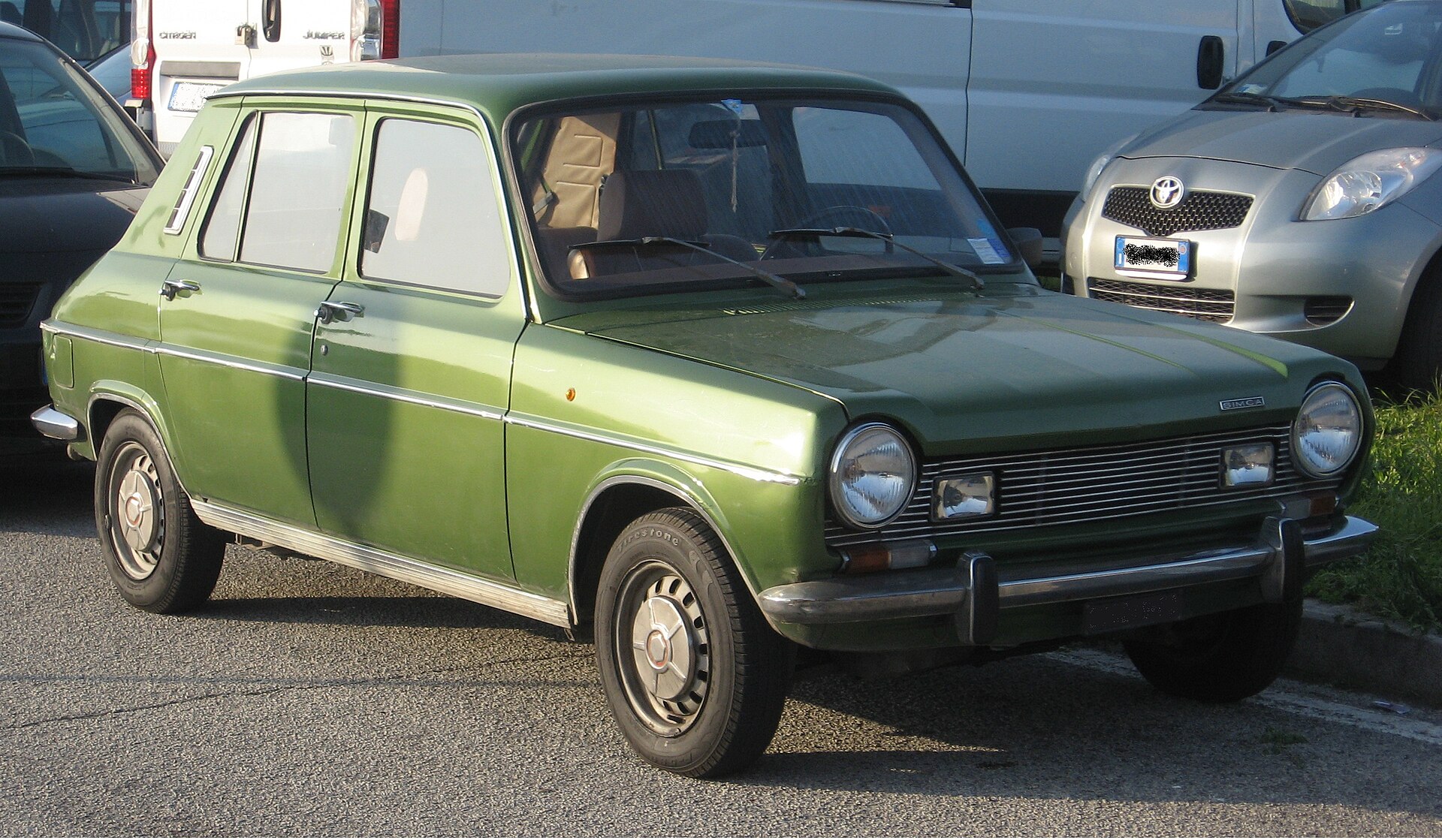
You've undoubtedly spotted a Simca without even knowing it: a little 1000 sleeping in the back of a barn, a 1100 in an old film, a name on an enameled sign. It's hard to imagine today that this brand was the second French automaker, that it invented cutting-edge cars and made millions of families dream… before fading away, swallowed up and forgotten. Here is the flamboyant saga of Simca — and the man who built it from nothing.
A scrap dealer turned tycoon
The story of Simca is first and foremost the story of one man: Henri Théodore Pigozzi, born Enrico Teodoro Pigozzi in Turin on June 26, 1898. At fourteen, his father disappears and young Enrico must support his family. He then launches himself into an unglamorous but lucrative business: scrap metal. He buys old car wrecks and resells them… to Fiat, which recycles them. This is how he eventually catches the eye of the Turin giant.
A connection forms with the Agnelli house. In 1926, at just 28 years old, Pigozzi becomes Fiat's general representative in France. He founds an import company, assembles Fiats near Paris, and learns the trade. The scrap dealer has become a respected industrialist. There's just one thing missing: his own brand.
Birth of a Franco-Italian brand
On November 2, 1934, Pigozzi acquires the bankrupt Donnet-Zédel manufacturer's Nanterre factory and founds the Société Industrielle de Mécanique et Carrosserie Automobile. SIMCA is born. The principle is simple and clever: produce Fiats under license in France, adapted to local taste. The first cars even bear the double name "Simca-Fiat".
The Simca 5, launched in 1936, is nothing other than a tricolor Fiat 500 "Topolino": tiny, economical, and endearing. Valiant, it even competed, including in endurance racing. In 1938 came the Simca 8, derived from the Fiat 508 C, more upscale and faster. The young brand grew rapidly, driven by a France eager to drive on a budget.
The Aronde: Simca's first true car
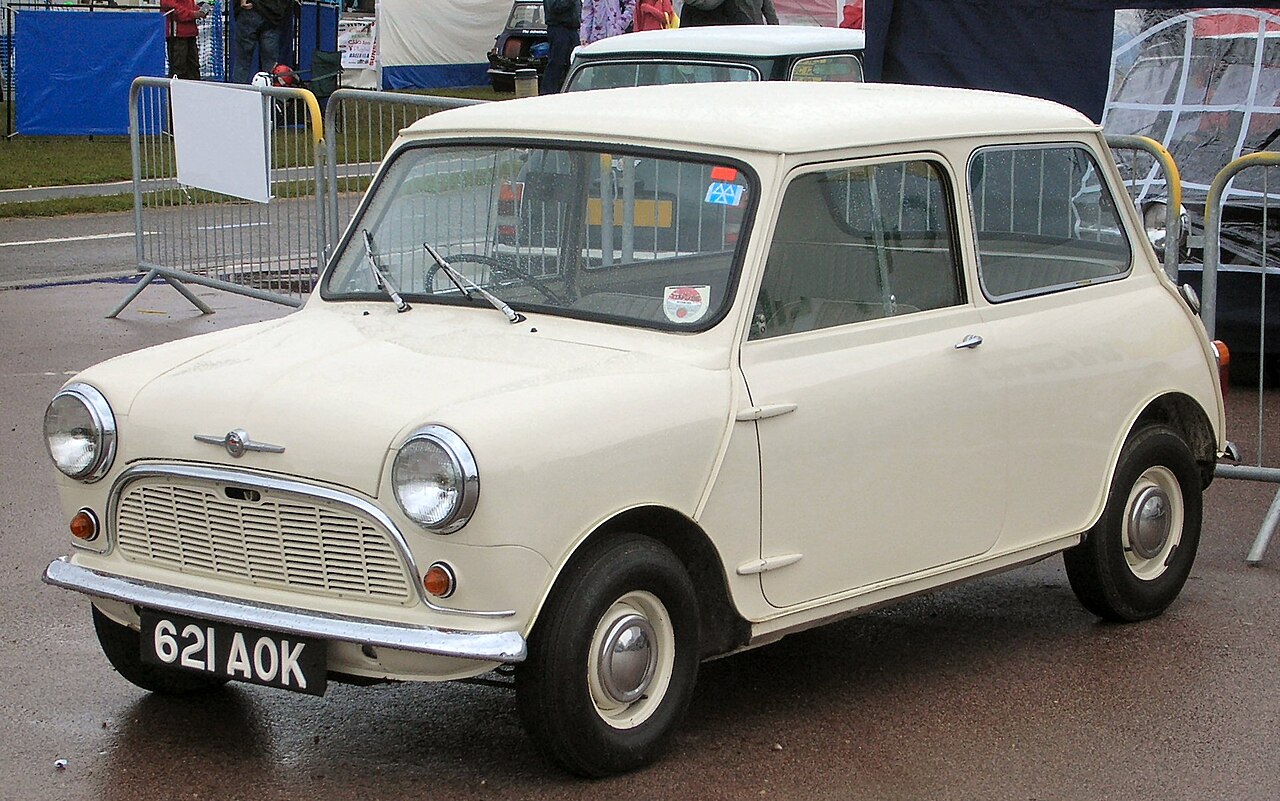
After the war, Pigozzi wanted to spread his wings. In 1951, a thunderbolt: the Aronde — "swallow" in old French — was the first Simca designed without a direct Fiat base. Modern styling, bulletproof mechanics, tight pricing: it was a popular triumph. It sold 1,425,329 units until 1963, shattering all of the brand's records.
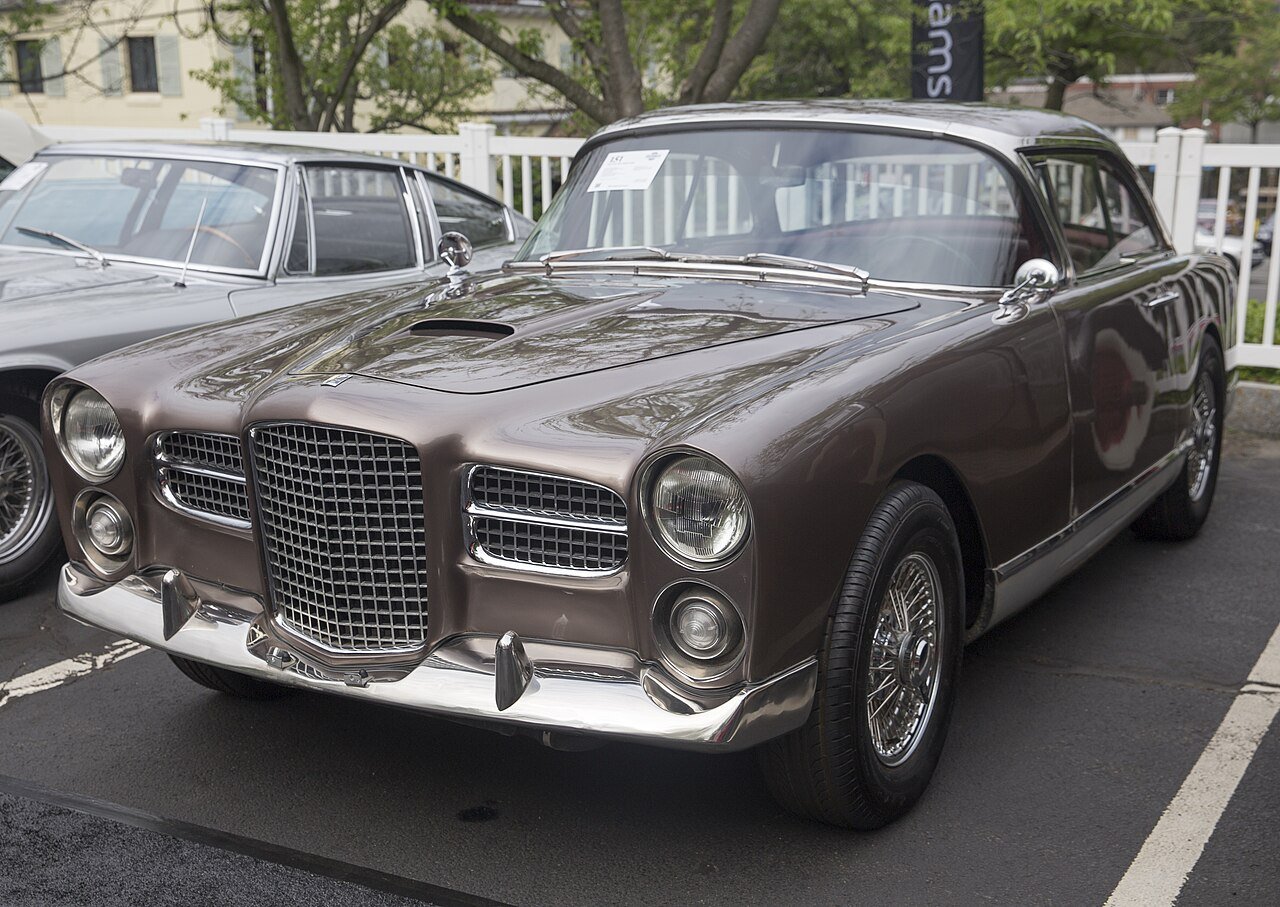
And Simca didn't just do practical cars: the Aronde spawned delightful variants, such as the Plein Ciel coupe and the Océane cabriolet, styled by coachbuilder Facel. Proof that the brand also knew how to inspire dreams. Pigozzi himself was already looking further ahead: he exported, and even launched Simca in Brazil in the late 1950s. The swallow had wings.
Poissy, the Vedette, and a very French V8
In 1954, Pigozzi struck a major blow: he acquired the Ford factories at Poissy, which would become the historic heart of Simca — a factory still active today within the Stellantis group. In the dowry, an unexpected gift: the Vedette, a large sedan powered by a… V8 of American origin, inherited from Ford. A Simca with a V8 engine, now that's impressive! In just a few years, Simca established itself as one of France's very first automakers, often neck-and-neck with Renault.
1000 and 1100: the golden age
The 1960s were a time of all-time highs. In 1961 came the Simca 1000, a small rear-engine sedan, simple, solid, and affordable. The public embraced it wholeheartedly: it remained in the lineup until 1978 and surpassed 1,639,557 units. Enthusiasts especially remember the spirited 1000 Rallye, a turbocharged version that enjoyed great success in amateur racing and remains highly sought after today. And for aesthetes, the sublime 1000 coupe designed by Bertone, later called the 1200 S, proved that a Simca could be a true little Italian at heart.
But the real masterpiece was the Simca 1100, unveiled in 1967. Beneath its modest bodywork lay a small revolution: front-wheel drive, transverse engine, rear hatch, and folding bench seat. In other words, the recipe for the modern family car — the one the whole world would eventually copy, from the Volkswagen Golf to the Renault 5. Infinitely modular, available as a wagon and van, the 1100 became Simca's best-selling model of all time, with over 2 million units. At that precise moment, Simca was simply at the cutting edge of European technology.
At its peak, the brand was absolutely everywhere. In the 1960s, it rivaled Renault, exported to every continent, and even manufactured its own cars in Brazil under the name Simca do Brasil. The 1000 took families on vacation, the 1100 became a tradesman's van, the Aronde rocked an entire generation: back then, it was hard to find a French street without a Simca parked along the curb. The brand embodied a certain idea of popular modernity — clever, affordable, and full of spirit. At that moment, no one imagined everything could collapse so quickly.
Under Chrysler's wing
But a cloud was gathering over Poissy: Chrysler. The Detroit giant entered Simca's capital in 1958 by buying out Ford's stake, then kept climbing, climbing higher. In 1963, Chrysler took control of the company, and Pigozzi progressively lost control of the brand he had created. The founder, this scrap dealer turned tycoon, passed away the following year, on November 18, 1964 — as if the man and his brand were linked by the same fate. By 1970, Chrysler owned 100% of Simca, which became "Chrysler France". The legendary name began to fade from the grilles.
Under American colors, the brand did not back down. It moved upmarket with large sedans Chrysler 160, 180, and 2 Liter launched in 1970, acquired sports cars through partnership with Matra — the surprising Bagheera with its three front seats, then the rugged Rancho — and even scored one final flourish: the 1307/1308 sedan, elected Car of the Year 1976. A magnificent swan song. Because behind the scenes, Chrysler itself was sinking.
From Chrysler to Peugeot: the twilight
In the mid-1970s, Chrysler teetered on the brink of bankruptcy and its European venture became a financial drain. On August 10, 1978, a bombshell: the American sold its entire Chrysler Europe — Simca in France, Rootes in England, Barreiros in Spain — to Peugeot for a symbolic dollar (accompanied nonetheless by several hundred million and 15% of PSA's capital). Peugeot thereby established itself among Europe's leading automakers — but inherited in the process a delicate industrial and financial situation.
In July 1979, the group made a logical choice: it consolidated the entire former Chrysler-Simca empire under a prestigious name it already owned, Talbot. Simcas became Talbots, and the brand even scored one last fine achievement: the Talbot Horizon, largely the product of Simca teams, was elected Car of the Year 1979. Followed by the Talbot Solara, Tagora, and Samba.
But having three brands coexist — Peugeot, Citroën, and Talbot, sometimes rivals — quickly proved untenable. Lacking the funds to finance everything, the group refocused its efforts: the Talbot lineup, inherited from Simca, was no longer truly renewed. The Simca name faded around the 1980s, and Talbot bowed out for passenger cars in 1986 in France, then in 1987 in Spain. Ironically, these long-neglected assets would eventually become one of the industrial cornerstones of the future PSA giant. Two great French brands have thus faded away — but the story of Talbot, rich and eventful, certainly deserves its own telling.
A living legacy
In nearly half a century, Simca produced millions of cars and left an enormous imprint on popular motoring: genuine technical boldness, a consummate mastery of practical cars, and that spirit of conquest inspired by an extraordinary founder. Long scorned, its models are now cherished by collectors — and a pristine 1000 Rallye or 1100 is now highly coveted.
On Brochure Auto, the brand lives on through its period brochures, free to view and download: from the sprightly Simca Aronde to the clever Simca 1000 and the revolutionary Simca 1100. A chance to dive back, for the length of a brochure, into the glittering France of the Thirty Glorious Years.
- https://fr.wikipedia.org/wiki/Simca
- https://fr.wikipedia.org/wiki/Simca_1100
- https://fr.wikipedia.org/wiki/Henri_Pigozzi
- https://lautomobileancienne.com/simca-1100-1967-1981/
- https://newsdanciennes.com/simca-1100-traction-et-revolution-a-poissy/