Renault Twingo E-Tech: the electric frog is back, and it bites!
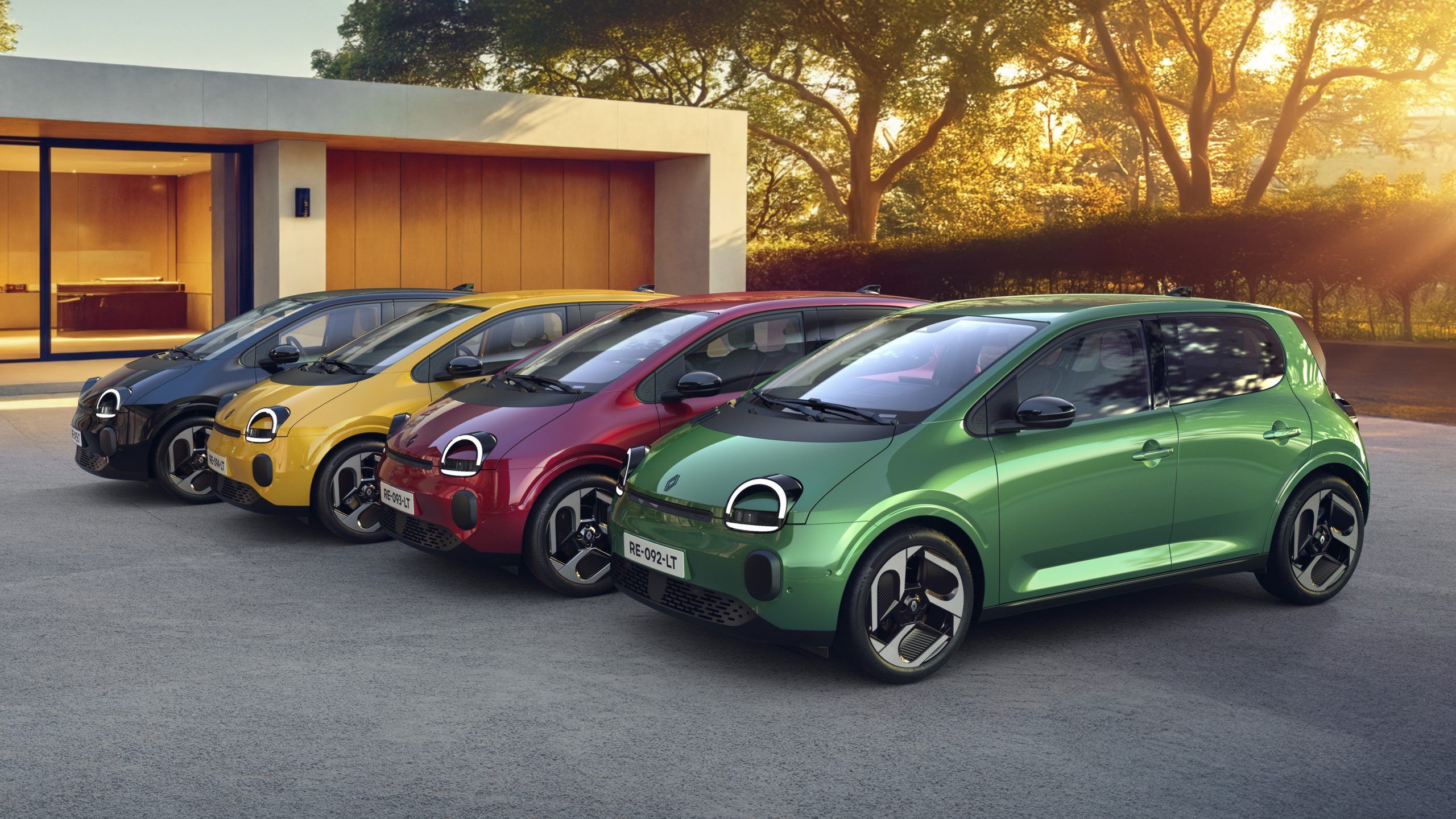
There are cars that make headlines once, and then there's the Twingo. Thirty years after setting the Paris Motor Show 1992 ablaze with its famous "frog face," the diamond-branded city car is back in a form that no one would have dared hope for: a fourth generation that's 100% electric, priced below the psychological barrier of 20,000 euros, and faithful to the original's rebellious spirit. Hold on tight, the little powerhouse is back.
From a bold sketch to a popular icon
To understand the Twingo E-Tech, you need to go back to the model's tumultuous origins. Several names had been considered for Renault's future city car: Ypso, Tonga, Maya. Ultimately, Twingo was chosen, presented as a contraction of the words "twist," "swing," and "tango." A name that had punch, for a car that would pack a punch.
The Twingo was unveiled on October 11, 1992, and officially launched on April 2, 1993. With its "frog face," it dared to apply a minivan profile to a city car, giving it generous interior space for its 3.43 m length. Behind this birth lay a remarkable industrial story. Patrick Le Quément, Renault's design director from 1988 to 2009, had convinced Raymond Lévy to continue this bold project despite internal resistance—a project that had nearly been buried several times since the 1970s.
To make the project viable, teams led by Yves Dubreuil had only three months to prove that the project could be profitable by applying an unprecedented recipe: that of "design to cost." The bet was won convincingly. The first generation Twingo ended in 2007, after fifteen years on the market and 2.4 million units sold.
Three generations, one same soul (with a few hiccups)
After the triumph of the Twingo I, the track record of the following generations was more mixed. The Twingo II, revealed in 2007, borrowed heavily from the excellent Clio 2 to reduce costs, but its design fell flat. Managers thought it clever to strip away the impish appeal—the very thing that was a desire accelerator. A rookie mistake.
In 2014, the Twingo III regained some of its personality, but its shared platform base constrained its architecture and ruled out any return of the legendary modularity. It took a fourth generation for the frog to truly regain its colors. At the Paris Motor Show 2024, for the 30th anniversary of the Twingo I, Renault presented a precursor concept that clearly signaled the direction.
The Twingo E-Tech: neo-retro, electric, and very serious
To design this fourth generation, Renault drew inspiration from the very first version launched in 1992. The silhouette takes up the characteristic monovolume format, with a short hood in line with the windshield. At the front, the slim grille and round headlights once again evoke the "frog" look of the original Twingo. Chief designer Gilles Vidal succeeded where so many others would have lapsed into sterile nostalgic copying: the Twingo E-Tech is both faithful to its DNA and resolutely contemporary.
On November 6, 2025, Renault unveiled the final version, very close to the concept and launched from January 8, 2026. Under its sparkling bodywork—available in, among other colors, Absolute Green that recalls the vibrant hues of the 90s—lies serious engineering. The Twingo is based on the AmpR Small platform from the R5, adapted to reduce costs. The multi-link rear axle gives way to a simpler axle derived from the Captur. Under the hood, a permanent magnet synchronous motor of 60 kW (82 hp) and 175 Nm, powered by a 27.5 kWh LFP cell-to-pack battery.
The figures that make you smile
The 0 to 100 km/h time is dispatched in 12.1 seconds, for a maximum speed of 130 km/h—ideal for urban and suburban journeys. The claimed range reaches 263 km in WLTP cycle, around 40% better than the old Twingo Electric—enough to get around all week without anxiety.
On the practicality front, the grand return of sliding seats is a real treat. The independent bucket seats slide over 17 cm, allowing you to vary the trunk volume between 210 and 310 liters, plus 50 liters under the floor. The Twingo keeps five doors, a 10-inch central touchscreen with Google integrated, and the "reno" voice assistant powered by ChatGPT-4o mini.
On active safety, the Twingo is no poor man's city car. Renault offers up to twenty-four driving aids, including an automatic parking system—a first in the segment—and a driver monitoring camera positioned in the windshield pillar. A "My Safety Switch" button lets you activate or deactivate up to five aids simultaneously.
The trump card: the price
The Techno version is priced at 21,090 € before bonus, while the entry-level Evolution version will be offered from 19,490 €. After deducting available incentives in 2026, the entry ticket can drop to 13,750 €—cheaper than a Citroën ë-C3! The Twingo is manufactured in Slovenia at the historic Novo Mesto plant, which improves its European eco-score.
A delicious anecdote: in 1993, the Twingo was the parting gift from the Socialist Party to President François Mitterrand. He had the choice between a blue and a red one at the Élysée—and he chose the red. Thirty years later, the electric frog no longer needs presidential elections to make headlines. It runs on electrons, and that's more than enough.
A smile in the city, version 2.0
The Twingo E-Tech is the story of a bet won twice: that of a small, popular, impish, and accessible city car that Renault manages to reinvent for the electric era without betraying its soul. It reconciles budget, style, and ecology with a lightness of touch that many of its competitors lack. In a word: it makes you want it.
The official brochures for the Renault Twingo E-Tech are available for free download on Brochure Auto. And if you want to relive the complete history, the brochures for the three previous generations of the Twingo are also waiting for you in our catalog.
Gallery
© Renault