The Dacia Bigster is here: when Romania thinks (very) big
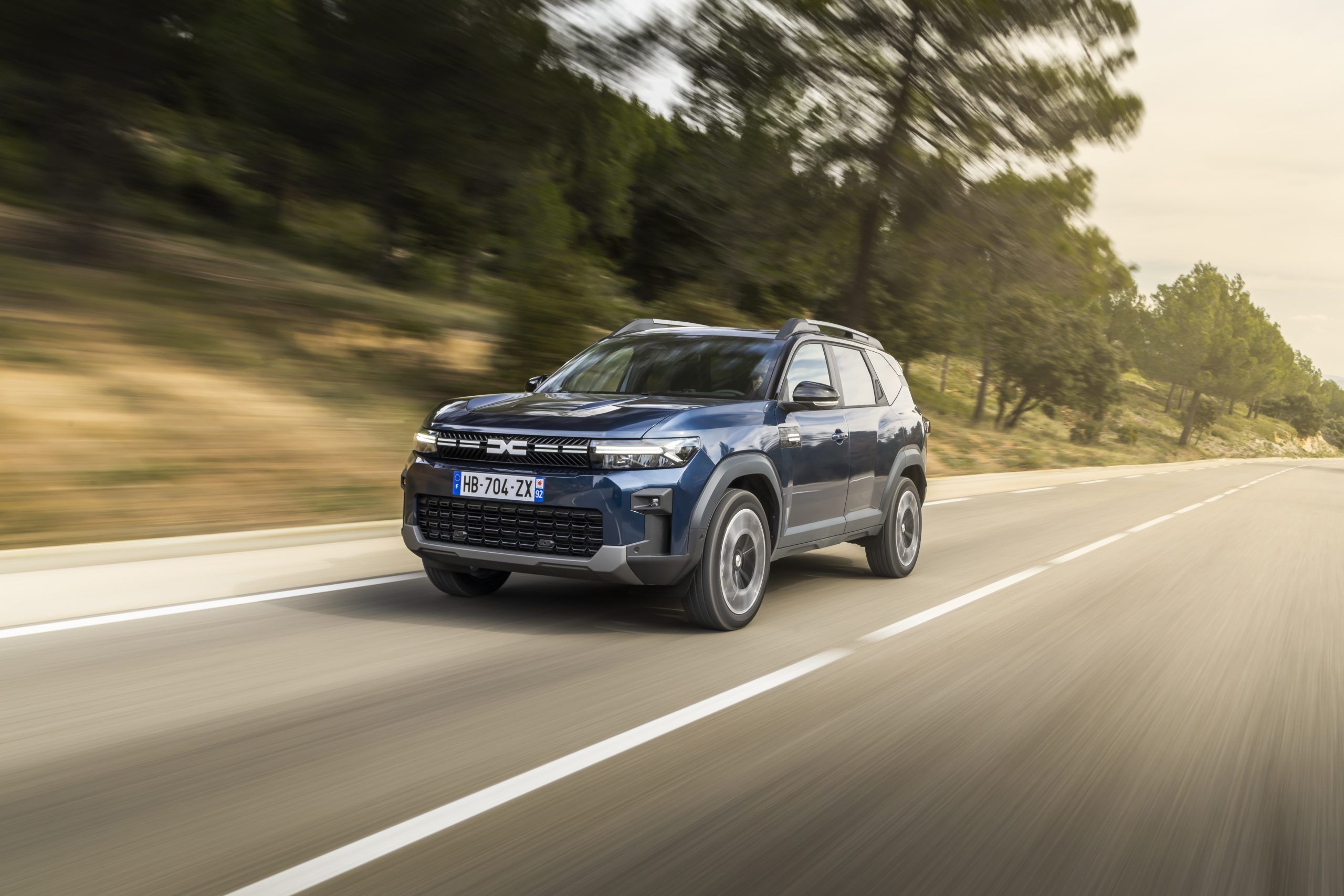
Twenty years ago, the name "Dacia" still raised eyebrows in car showrooms. An Eastern European brand, somewhat rustic, heir to an era when Renault 12 clones were manufactured in Mioveni without too many questions asked. Today, that same brand is signing one of the most anticipated launches in the C-segment in France: the Bigster. A family SUV measuring 4.57 meters long, available in several powertrains — micro-hybrid petrol, full hybrid, LPG, or even all-electric 4×4 — and priced from 24,990 euros in Essential TCe 140 or ECO-G 140 trim. Suffice it to say we're no longer in the minor leagues.
From Bucharest to the top: the Dacia saga in fast-forward
A quick look back at the origins, because the story is worth telling. Dacia was born in 1966 in Mioveni, Romania, driven by Nicolae Ceaușescu's socialist regime's ambition to motorize the country. Its name? Borrowed from "Dacia," the ancient name Romans gave to the territory of present-day Romania. Production began in 1968 with the Dacia 1100, derived from the Renault 8, followed in 1969 by the Dacia 1300 — which was nothing more than a rebadged Renault 12, produced until 2006 with more than two million units sold according to available records.
The major turning point came in 1999, when Renault acquired the brand and set it a clear objective: conquer emerging markets with reliable and affordable cars. The Logan, launched in 2004 at 5,000 euros, had a bombshell effect. A new car at the price of a used one—that was a revolution. The rest of Europe followed suit from 2005 onward and never looked back—in the best way possible. Then came the Sandero, followed by the Duster (for years now one of the most sought-after SUVs among European private buyers, regularly topping its segment), then the Jogger. In April 2022, Dacia celebrated ten million vehicles produced. The little Eastern European brand had become a pillar of the European market.
The Bigster: from sketch to asphalt
The idea for the Bigster dates back to January 2021, when Luca de Meo unveiled the eponymous concept car during the presentation of the "Renaulution" strategic plan. The silhouette is bold and assertive—almost military—with taut lines and generous ground clearance. The message is clear: Dacia wants to move upmarket and tackle the C-segment, the family compact SUV category.
Three years later, the production model made its debut at the Paris Motor Show in October 2024 (90th edition). Orders open on January 9, 2025, with first deliveries arriving in June 2025. The Bigster is built on the Renault Group's CMF-B platform—the same foundation used for the Renault Clio, Captur, and Nissan Juke—but extended by 23 centimeters compared to the Duster III. An extension you can see and feel: 4.57 meters long, 1.81 meters wide, 1.71 meters tall, with a 2.70-meter wheelbase. Inside, rear knee room is among the best in the segment, and the trunk capacity reaches 702 liters depending on configuration—among the most generous in the class.
The lineup: the Romanian Swiss Army knife
Where the Bigster really surprises is in the diversity of its powertrains. Dacia has deliberately chosen to ignore pure electric in favor of offering instead a genuine range of hybrid technologies—and even LPG, a tradition deeply rooted in the brand's DNA.
The entry-level model, the TCe 140 micro-hybrid 48V, features a turbocharged 1.2-liter three-cylinder with 140 hp and 230 Nm of torque, assisted by a belt-driven alternator-starter. Starting price: 24,990 euros. Available at exactly the same price, the ECO-G 140 combines petrol/LPG dual-fuel with mild 48V hybridization, delivering 140 hp on petrol and 130 hp on LPG. Total range with both tanks: up to 1,300 kilometers. At current LPG prices in France, the economic argument is unbeatable.
For those wanting more urban comfort, the Hybrid 155 pairs a 1.8-liter four-cylinder with 109 hp to a 49 hp electric motor, a 1.4 kWh battery, and an automatic continuously variable transmission without clutch. Combined output: 155 hp. It systematically starts in all-electric mode and runs in zero-emission mode approximately 80% of the time in urban driving, according to manufacturer data. Price: from 29,700 euros in Expression trim. Finally, for the adventurous, the Hybrid-G 150 4×4 combines mild hybridization, LPG/petrol dual-fuel, and all-wheel drive thanks to a 31 hp rear electric motor—a particularly rare combination at this price point. Plenty of scope for off-road adventures without emptying your bank account.
Figures worth considering
In 2025, the Bigster has sold more than 67,000 units worldwide—a launch that can be described as excellent. The Bigster has clearly helped support Dacia's commercial momentum in 2025, in a pressured European market.
Compared to a Peugeot 3008, a Renault Austral, or a Citroën C5 Aircross, the Bigster shows a significant price advantage depending on the trims compared—while offering a generous trunk, class-leading interior space, and coherent powertrains. It's hard not to see a serious proposition for budget-conscious families.
And meanwhile, on desert tracks, the Dacia Sandrider—a rally-raid prototype running on synthetic fuels—offered Sébastien Loeb victory at the 2025 Morocco Rally, the team's second W2RC success. It's not quite a Bigster racing across Saudi dunes, but the brand's adventurous and courageous image is very real.
Browse the brochure before signing
If the Dacia Bigster has piqued your curiosity, Brochure Auto makes the official brochures for this model available to you so you can compare everything at your leisure, from the technical sheet to the complete price list. And if you've already made up your mind or are considering it, the Dacia Bigster user manual is also available so you can take the wheel without any unpleasant surprises.