Renault Espace: The Saga of the Pioneer That Invented the Minivan… Before Turning Its Back on It
Some cars fill a slot in the catalogue, and others create the slot itself. The Renault Espace belongs to the second category. In 1984, it faced no competitors, for a simple reason: the family MPV, in Europe, did not yet exist. Forty years on, it has been transformed into an SUV, swallowed up by the wave it had unwittingly set in motion. In between, six generations and a fine lesson in how a good idea always ends up being copied.
An idea nobody wanted
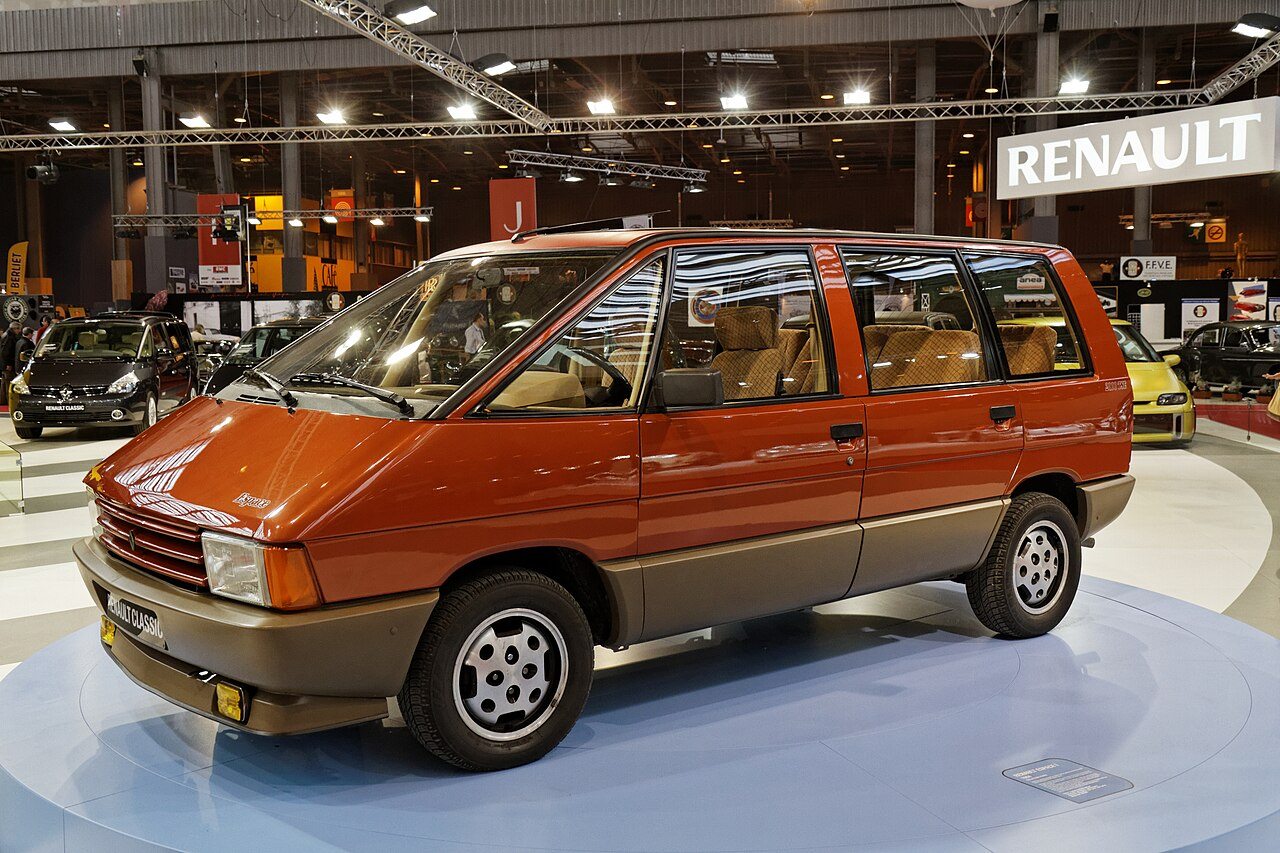
The story begins at Matra, a craftsman-engineer of motorsport turned specialist in clever bodywork. Its project for a single-box family van was first pitched to the PSA group, which deemed it too risky and shelved it. Renault, for its part, dared to take it on. The first Espace rolled out in 1984, built at Romorantin in the Matra factory, with its polyester body mounted on a galvanised steel chassis — know-how inherited from competition racing.
The concept was a small revolution: a large glazed volume, a high driving position, and above all individual, removable seats that could be taken out or turned to face each other. This was no longer just a car but a lounge on wheels. The public, taken aback, took a while to warm to it: sales got off to a sluggish start, so much so that legend has it barely a handful of units found buyers in the first month. Then word of mouth did its work. Restyled in 1988, the first-generation Espace ended its run with nearly 192,000 units sold.
The golden age of the rolling lounge
The second generation, in 1991, didn't shake up the recipe: it refined it. Rounder, better powered, it topped 317,000 sales and established the Espace as the undisputed benchmark of a now-coveted segment: the Citroën Évasion, Ford Galaxy, Volkswagen Sharan and others arrived in turn, but always in its wake. In 1996, the Espace III took refinement further, introduced the long-wheelbase Grand Espace version, and remains, to this day, the last one designed and assembled by Matra. It was also a time of full-blown extravagance: the 1994 Espace F1 concept, fitted with the three-litre V10 from the Williams Formula 1 car and capable of sprinting from 0 to 100 km/h in just over two seconds. An 800-horsepower MPV, purely for the fun of it.
In 2002, the Espace IV turned an industrial page: Matra left the automotive business, and Renault built its family car itself for the first time. Hands-free card entry, a huge glass roof, upmarket trim: the car moved upmarket and became the best-selling of the line, with more than 372,000 units sold over a career that stretched until 2015. At its peak, the Espace had nothing left to prove.
The SUV trap
That's when the tide turned. The MPV, the very format the Espace had invented and popularised, began to lose its appeal among customers won over by the rising trend: the SUV. The fifth generation, launched in 2015, attempted a balancing act. Lower and sleeker, it moved away from the MPV format to present itself as a "crossover," even if it meant denying part of its own DNA. The gamble didn't really pay off. Over eight years, the Espace V plateaued at around 100,000 units, a pittance compared with its predecessors.
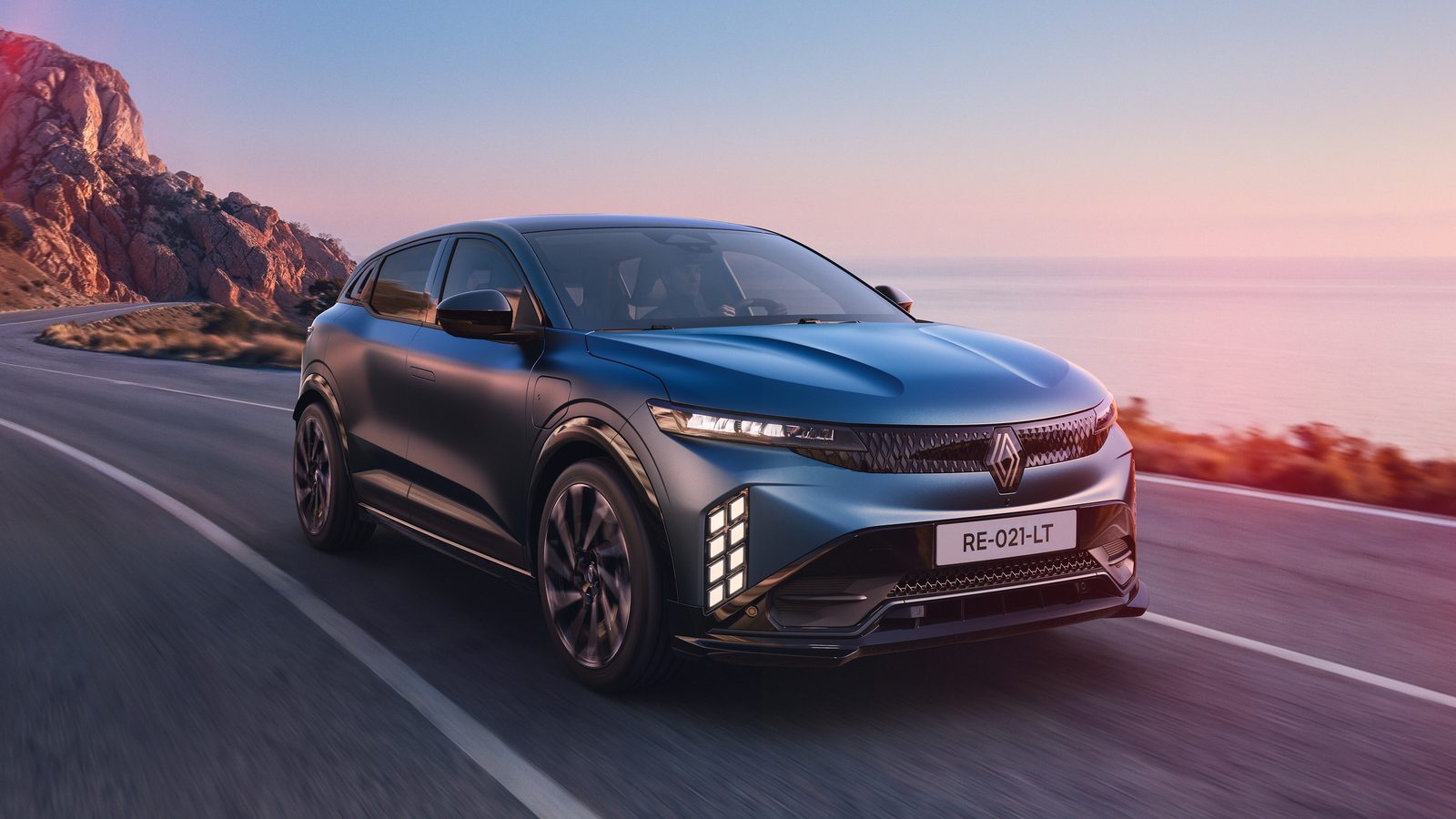
The conclusion was inevitable. For the Espace VI, unveiled in 2023, Renault stopped resisting: the car became, quite plainly, a seven-seat SUV, built on the Austral platform and powered exclusively by a 1.3-litre petrol hybrid engine developing 200 horsepower. The name survives, but the spirit of the rolling lounge has died out. The Espace ended up resembling the very vehicles that had dethroned it.
A legacy still rolling on
Should we see this as a betrayal? More an adaptation. Over forty years, the Espace sold more than a million and a half cars and, above all, taught an entire industry that a family could travel differently. MPVs have almost all disappeared from catalogues, but the idea of modularity, smart use of space and onboard living they embodied now runs through virtually every family SUV. In that sense, the Espace didn't lose: it won so completely that its formula became invisible, absorbed into the norm. A pioneer never truly dies — it just gets copied.
Want to know more? Find all the Renault Espace brochures available to download for free on Brochure Auto.
Gallery
Photos © Guillaume Vachey (CC0), Vauxford, Rudolf Stricker, Alexander-93 / Wikimedia Commons (CC BY-SA)
- https://fr.wikipedia.org/wiki/Renault_Espace
- https://en.wikipedia.org/wiki/Renault_Espace