Xiaomi SU7 and YU7: When the Smartphone King Becomes an Automaker
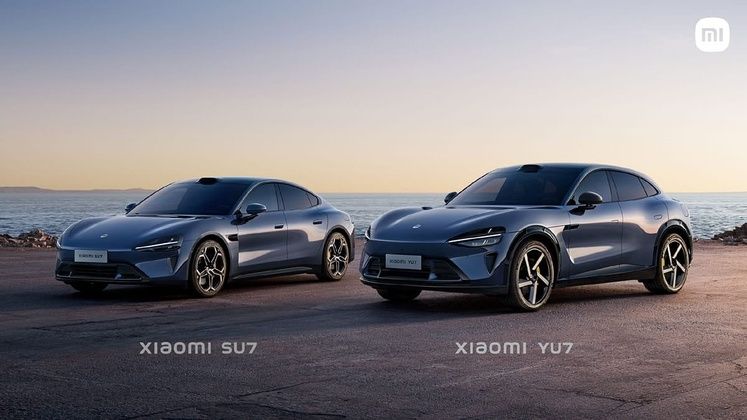
Just five years ago, Xiaomi was primarily known for its budget-friendly smartphones and smart fans. Today, the brand founded by Lei Jun produces sedans that rival hypercars at the Nürburgring and fascinates Ford's CEO so much that he refuses to return his loaner vehicle. Welcome to the Xiaomi Auto era.
From pocket to road: a forced conversion
The story begins in Beijing in January 2021, in an emergency boardroom. Xiaomi has just been blacklisted by the United States, threatening its core smartphone business. In this crisis context, a question emerges: what will happen to the 30,000 to 40,000 employees if the mobile business collapses? Lei Jun's answer is radical: electric vehicles. He dedicates 10 billion yuan — approximately 1.4 billion dollars — to it and mobilizes 3,400 engineers. Three years later, the SU7 was driving through the streets of Beijing.
The SU7, the sedan that changed everything
Unveiled on December 28, 2023, the SU7 officially launches on March 28, 2024 in China. In 27 minutes, 50,000 pre-orders are recorded. That figure says it all. The sedan comes in three configurations. The base model features a 220 kW (299 hp) permanent magnet synchronous motor in rear-wheel drive. The Max version boasts two motors for 495 kW (673 hp) in all-wheel drive and accelerates from 0-100 km/h in 2.78 seconds. As for the SU7 Ultra, it aligns three motors totaling 1,548 hp for a 0-100 km/h time of 1.98 seconds and a top speed of 350 km/h. In 2024, the SU7 Ultra prototype set a Nürburgring lap time of 6:46.874, significantly improving the previous category record, and the production version subsequently achieved a time around 7 minutes on the Nordschleife, establishing itself as the benchmark among production electric vehicles. When Jim Farley, Ford's CEO, drove the SU7 for six months after having it flown back from Shanghai, he called it "fantastic" and compared it to a Porsche Taycan — recognition that speaks volumes about the progress made.
After nearly 130,000 deliveries in 2024 — well beyond the initial target of 60,000 —, Xiaomi Auto delivered over 400,000 vehicles in 2025 and achieved profitability in its automotive division in less than two years. Where Tesla took several years, the Chinese newcomer accomplished it at breakneck speed.
The YU7: the SUV of confirmation
Building on this success, Xiaomi launches its second model in 2025: the YU7, a five-door SUV nearly 5 meters long sharing the same Modena platform as the SU7. Its most powerful variant develops 681 hp via a HyperEngine V6s Plus permanent magnet synchronous motor. The announced range reaches up to 835 km according to the Chinese CLTC cycle. The pre-order figures are staggering: nearly 200,000 reservations within minutes of opening orders, and over 280,000 in one hour. Production began at the Beijing F2 factory starting in June 2025.
A factory built for speed
Xiaomi Auto's manufacturing facility is located in the Yizhuang district, south of Beijing. Built in less than two years — from April 2023 to June 2024 — it spans 718,000 m² and produces one vehicle every 76 seconds, thanks to near-continuous production flow and a 91% automation rate. Over 700 robots work in the body shop. The crown jewel of the facility: presses called Hypercasting, developed in-house, capable of 9,100 tons of force and reducing up to 72 distinct metal pieces into a single body part — a technique directly inspired by Tesla's Gigacasting, taken even further. Facing explosive YU7 demand, a second factory whose verification phase was completed in April 2025 has bolstered the operation.
Technologies developed from A to Z
What sets Xiaomi apart from most competitors is the degree of in-house control of its technology chain. The permanent magnet synchronous motors from the HyperEngine family — V6, V6s, V8s — are designed and manufactured in-house. The V8s spins up to 27,200 rpm for 425 kW, a world record for a production electric motor at the time of its introduction. The Modena platform, shared between the SU7 and YU7, integrates 800-volt architecture and CTB (cell-to-body) design where the battery is an integral part of the vehicle's structure. Battery cells, developed in partnership with CATL, are mounted upside down, and the electrolyte design is optimized to direct any potential heat dissipation downward, away from occupants. Finally, the HyperOS operating system connects the vehicle to the driver's home and personal ecosystem as part of a global strategy called "Human × Car × Home": your smartphone, your home, and your car become one.
Europe awaits, but not for long
The official European launch is planned for 2027, with an R&D center established in Munich to adapt models to local regulations. In the meantime, you can already explore the official Xiaomi SU7 brochure on Brochure Auto, and find all available publications for the Xiaomi brand on our dedicated page.